








Are Your workflows ready for the future of modular construction?
Find out in 30 seconds with these must-know numbers.
Modular construction is evolving – are your workflows keeping up?
Managing modular construction is more complex than ever, requiring tight coordination across design, production, and operations. Leading companies are rethinking their workflows to boost speed, accuracy, and efficiency. Learn what matters in 2025 with key numbers.
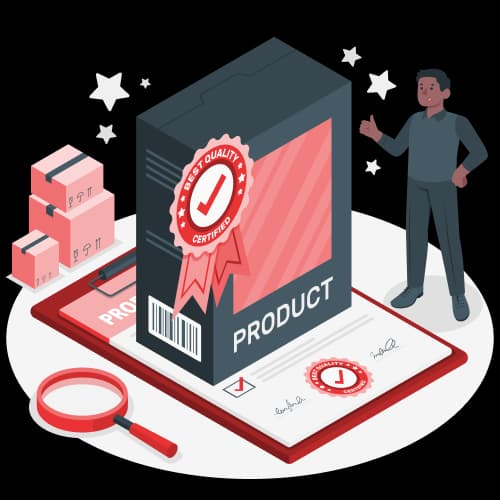
of contractors consider product quality a top priority when selecting building products.
B2B buyers demand high-quality, industry-compliant products. Providing clear material specifications, manufacturing details, and high-fidelity visuals builds trust and ensures buyers feel confident in their purchase decisions.

of B2B companies will consolidate their sales processes, applications, data, and analytics into a unified system by 2025.
Disconnected workflows between sales, production, and operations lead to inefficiencies and costly delays. Leading B2B companies will be the ones that integrate configuration, pricing, and order data into a single system – ensuring more accurate production planning, and faster fulfilment.
of industrial manufacturing and construction companies are already using or planning to use AI to enhance customer experience.
AI can simplify modular product configuration by capturing requirements, detecting conflicts, and suggesting buildable options in real time. It reduces manual checks, minimizes errors, and helps product teams handle complex customization without back-and-forth.

of industrial manufacturing and construction companies are using or experimenting with AR to visualize projects.
AR isn’t just for B2C products – it’s transforming how B2B teams plan and execute projects. Scaled models in real-world environments help assess fit, detect conflicts before production, and reduce costly redesigns, keeping projects on track.
“Managing modular construction at scale isn’t a design problem anymore – it’s a workflow problem. The companies winning 2025 are the ones connecting configuration, production, and fulfilment into a single source of truth.”