63% of Cabinet Websites Hide Their Pricing. Why Yours Shouldn't.
63% of cabinet websites hide pricing and lose buyers on the first click. Here are four ways to show a price online, even for made-to-order cabinets.
 Camille Felappi
A buyer lands on your website. They like your cabinet styles. They start picturing them in their kitchen, their bathroom, their garage. Then they go looking for the one thing that decides whether they keep going or close the tab: the price.
And they find nothing. Not a number. Not a range. Not even a "starting at."
This is the most common mistake in cabinet ecommerce. It kills momentum when a buyer is most interested.
We looked at how 120 storage and cabinet websites handle their buying experience, and the pattern was hard to miss: 63% show no pricing at all. Only 32% display it clearly, and another 5% show it partially.
Hiding the price is understandable when you sell made-to-order cabinets. The final cost depends on dozens of variables.
But if you want to know how to sell cabinets online without losing buyers on the first click, showing pricing is key. Here's why hidden pricing backfires, and four ways to show pricing even when every order is custom.
Why Cabinet Sellers Hide Pricing on Their Website
Cabinet sellers usually hide prices for a practical reason: made-to-order products are genuinely hard to price. The final number shifts with dimensions, materials, finishes, door styles, drawer layouts, accessories, and installation.
So the hesitation makes sense. You don't want to publish a number that turns out to be wrong. You don't want sales conversations starting from a figure you never meant to commit to. And you don't want buyers comparing products without understanding what's actually included.
But look at it from the buyer's side. They aren't expecting a perfect, final quote on the first click. They're trying to answer a much simpler question: Is this in my budget before I fill out a form?
That's where hidden prices start to work against you.
With no price to go on, buyers guess, and the guess usually works against you. Either the product is likely too expensive. Or they think they need a sales call to find out. Both create friction before the buyer has any real reason to push through it.
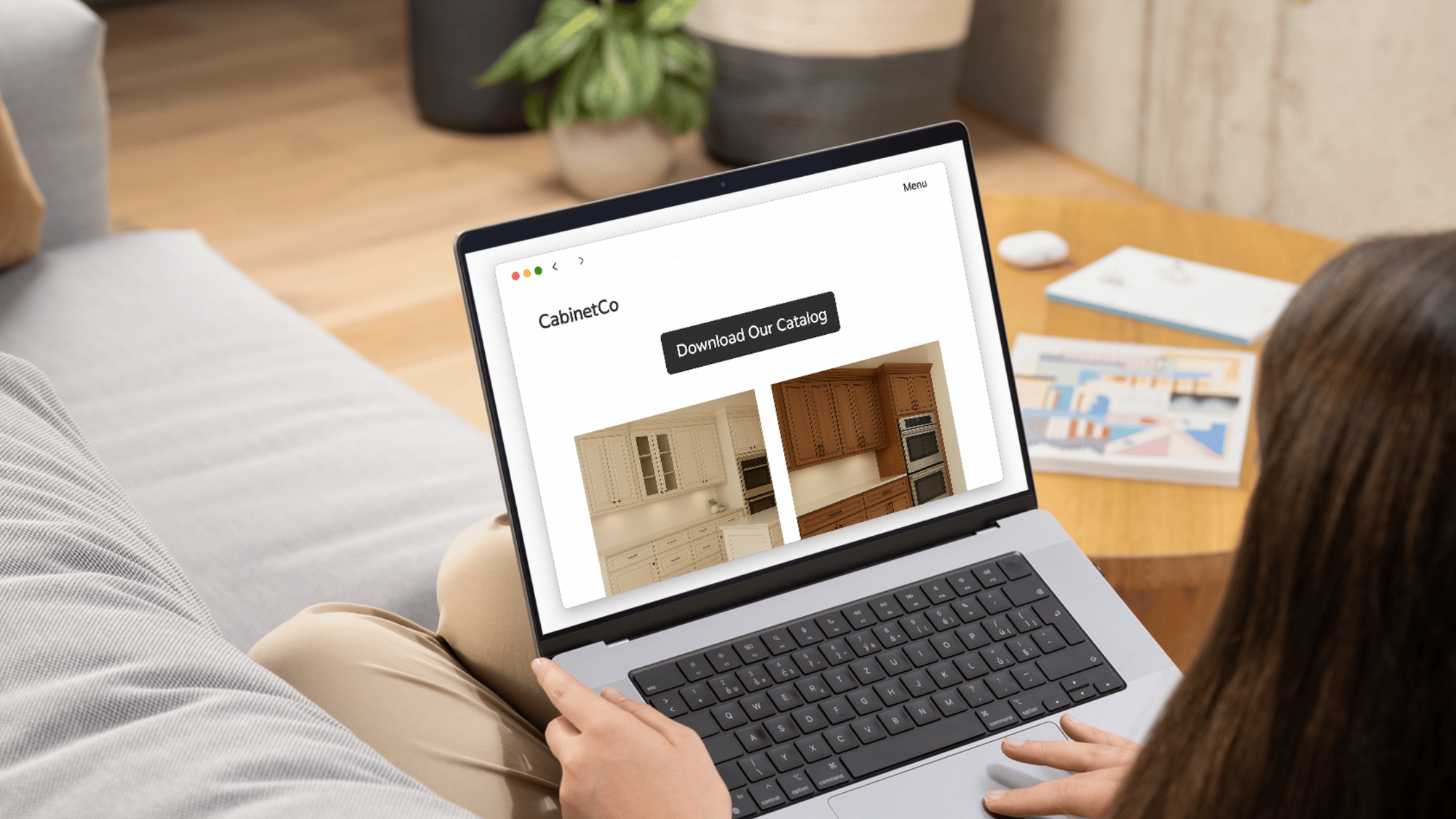
It creates a problem on your side, too. A website with no pricing can't separate serious buyers from poor-fit ones. Everyone gets funneled into the same next step: request a quote. So a shopper with the wrong budget must contact you just to learn your price is too high. And a shopper with the right budget may leave because the process feels like a black box.
Hidden Prices and Hidden Products Go Together
A missing price is often a sign of a bigger issue: the website does not let buyers configure what they are actually buying.
Size, finish, layout, drawers, accessories, and installation all change the cost. But if your website only shows finished projects or catalog pages, there is no clear place for pricing to live.
Most cabinet websites fall into three discovery types:
- Static discovery: The buyer sees finished projects through galleries, PDFs, or general product pages, but cannot meaningfully change anything.
- Selection-based discovery: The buyer can choose from menus, filters, or dropdowns, but may not see how those choices affect the product or price.
- Interactive configuration: The buyer can customize the cabinets in 3D and visualize the results update. Pricing changes in real time, alongside the configuration.
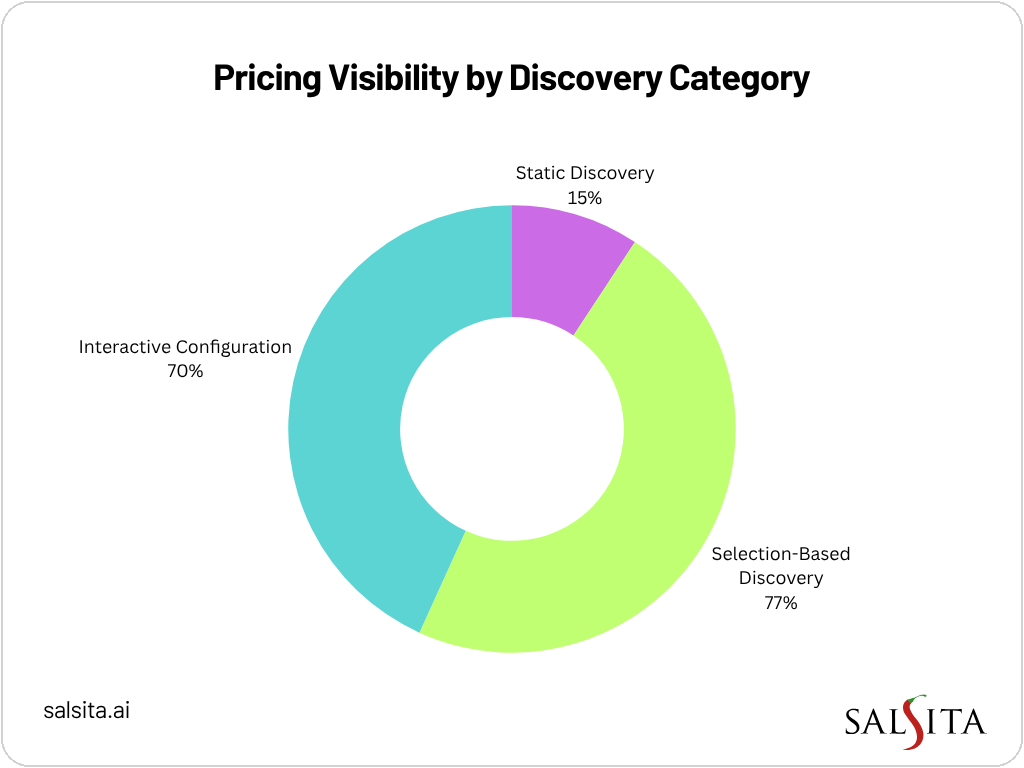
The pattern is clear. Only 15% of static-discovery sites show pricing, compared with 77% of selection-based sites and 70% of interactive-configuration sites.
Among the most static experiences, hidden pricing is even more common:
- 91% of PDF-based websites showed no visible pricing
- 88% of gallery-based websites did not display pricing
- 81% of websites with no real customization interface also lacked pricing
So the problem is not only that the price is missing. The buyer also has no easy way to understand what their version of the product would look like or how those choices affect cost.
That is why static discovery and hidden pricing often go together. A gallery can inspire. A PDF can inform. But neither helps the buyer answer the question that moves them forward: "What would this cost for me?"
Four Ways You Can Show Cabinet Pricing Online
If you're working out how to sell cabinets online, pricing is the first thing to fix. The strongest option is a 3D configurator with real-time pricing, where buyers build the exact version they want and watch the price respond to every choice.
But you don't have to start there. These four options climb from the simplest thing you can do right now to the most complete.
| Approach | What it does | Effort | ROI |
|---|---|---|---|
| Starting prices or minimum project values | Gives buyers a basic anchor, such as "from $4,500" or "projects start at $10,000" | Minimal | Low |
| Example configurations | Shows sample builds, such as basic, mid-range, and premium setups, with estimated prices | Low to medium | Moderate |
| Online price estimator | Uses inputs like size, finish, layout, and main options to return a useful ballpark | Medium | High |
| 3D configurator with real-time pricing | Updates the price as the buyer changes dimensions, finishes, drawers, accessories, and other choices | High | Highest |
All four options beat showing nothing, but they don't pay off the same. A starting price stops you from losing buyers on the first click. A 3D configurator for cabinets is what actually wins them. It's the biggest investment to set up. But it's the only interactive option. The buyer builds their exact cabinet, watches the price update in real time as they change it, and adds it straight to the cart.
Case Study: How a Vanity Manufacturer Shows Pricing in Real Time
Picture Perfect had the same problem many cabinet manufacturers face. The product was custom, but the online buying experience did not make customization easy.
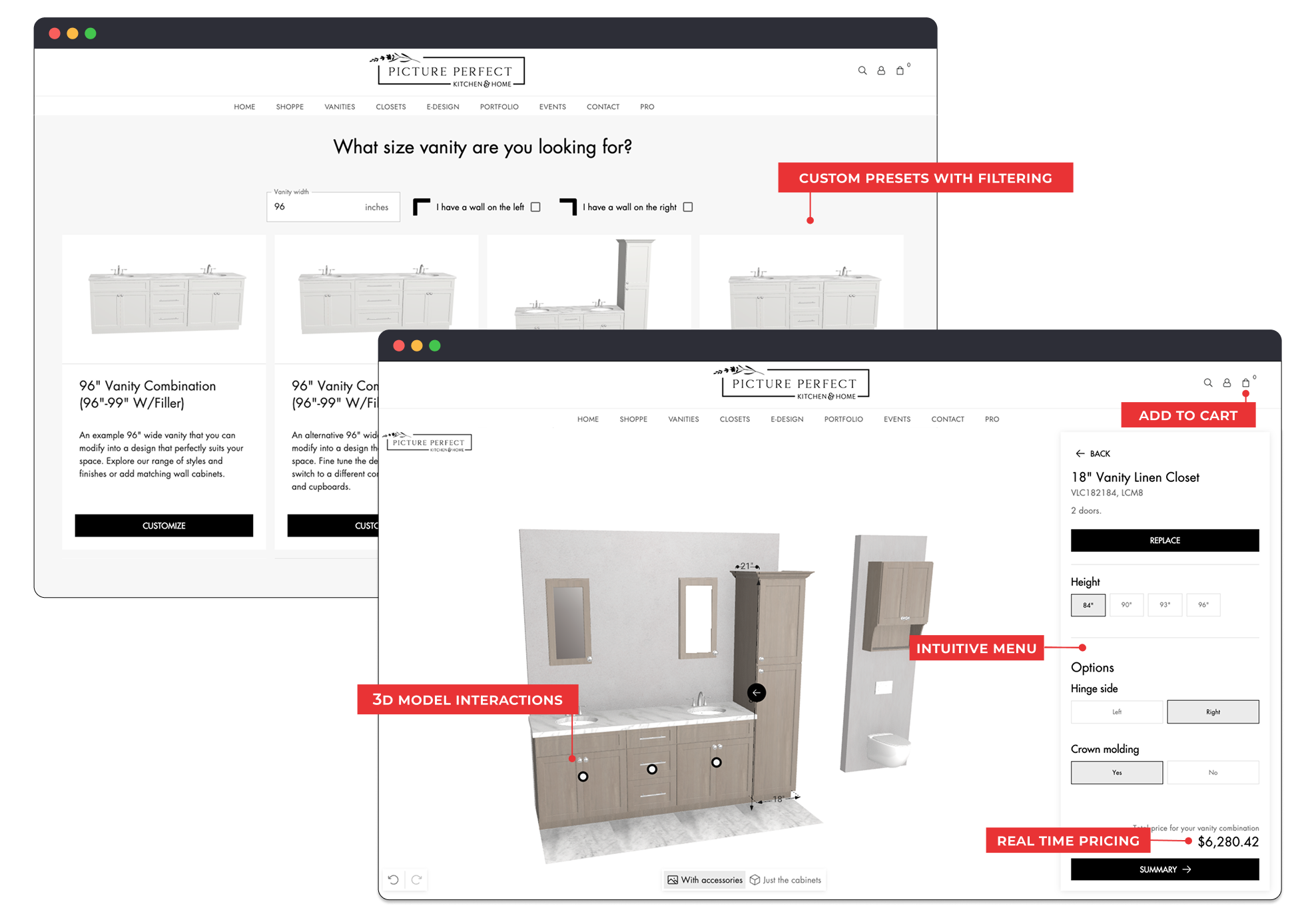
After adding a 3D cabinet configurator with real-time pricing, here's what changed:
- 90% Faster Online Buying Flow: What used to involve hours of back-and-forth is now a five-minute online flow. Customers configure their vanity, see the final price, and move to checkout, often without involving the team.
- 25% Higher Average Order Value: Orders coming through the configurator are worth more because customers explore options and select add-ons during configuration.
- Stronger Customer Engagement: Instead of browsing static product lists, customers actively configure vanities, spending more time interacting with products.
- Reduced Sales Effort Per Order: Sales reps no longer design and price everything. Customers either configure on their own, or have sales reps design the vanity for them with the configurator. In both cases, it cuts manual work.
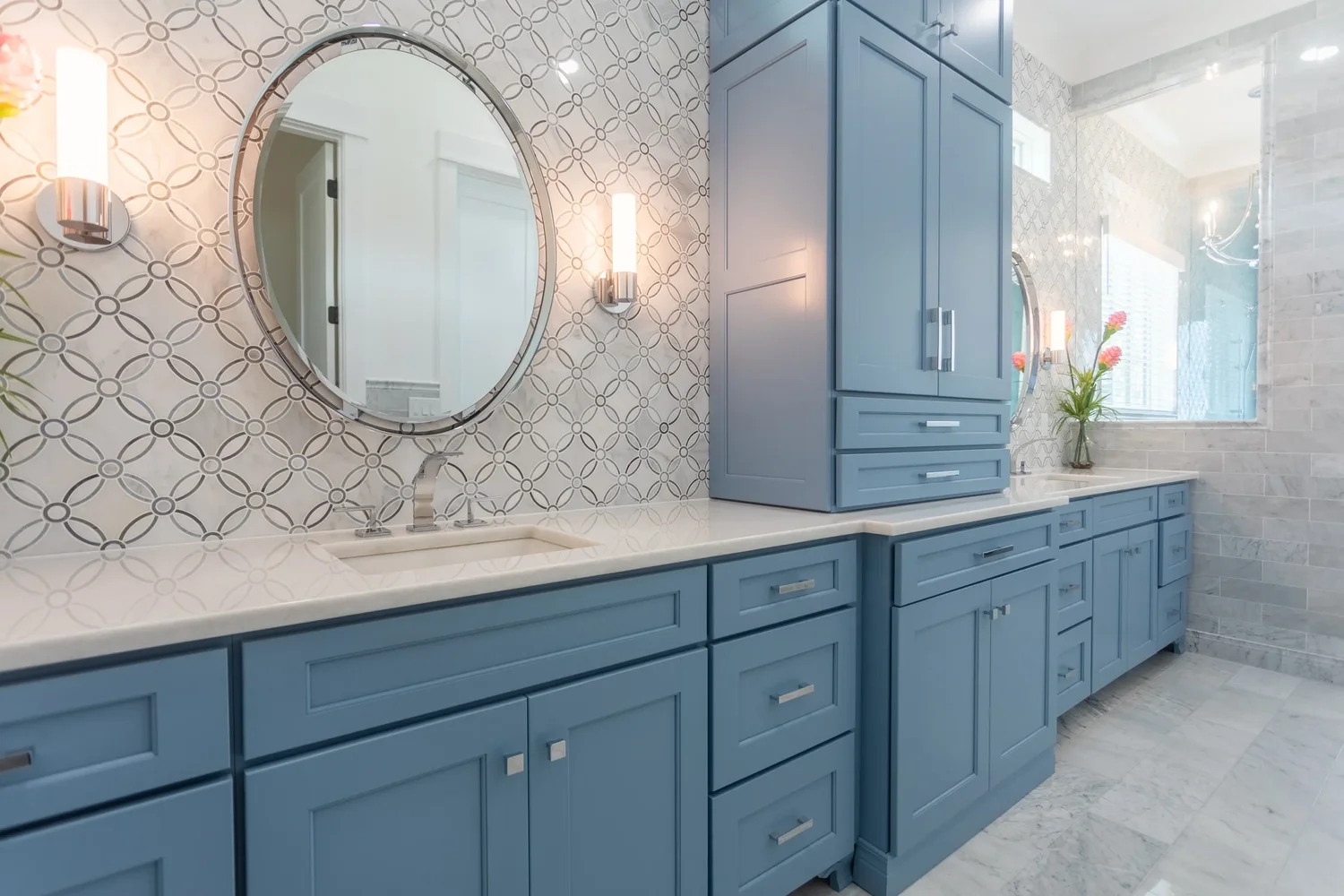
The takeaway for cabinet manufacturers is simple: if a product follows repeatable rules, pricing can move beyond manual quotes. A 3D cabinet configurator lets buyers build exactly what they want. It shows real-time pricing as they make choices, and adds the finished product to cart. Your sales team steps in where they add the most value: complex requests, higher-touch support, and closing serious buyers.
Showing Pricing Puts You Ahead of Most of the Market
Most cabinet manufacturers hide their prices, so showing yours is a real advantage. While 63% of the market lets buyers guess, you can be the website that answers the budget question early and shows real-time pricing.
Knowing how to sell cabinets online comes down to one thing most competitors get wrong: making the price easy to find. A 3D configurator goes further than ranges or example projects. Instead of asking buyers to imagine the final cabinet, guess the cost, and request a quote, it lets them build their own online. They choose the size, finish, layout, drawers, accessories, and other options, then see the product and price update together.
For buyers, that removes the biggest unknowns. They can see what they are getting, what it costs, and what changes the total cost.
For manufacturers, it means fewer vague quote requests and better-qualified buyers. Sales is no longer the first place buyers go for basic pricing. It becomes the place they go when they need help, a complex project review, or support closing the order.
The cabinet brands that win online will not be the ones that hide pricing until the last possible moment. They will be the ones that make custom products easier to understand, easier to price, and easier to buy.
Want to see how this could work for your products?
Book a demoFAQ
Why do so many cabinet websites hide their pricing?
Most cabinet sellers hide prices because their products are made to order, and the final cost depends on dimensions, materials, finishes, door styles, drawer layouts, accessories, and installation. Publishing a single number feels risky when so many variables are in play. The problem is that buyers read a missing price as "probably too expensive" or "this will mean a sales call I'm not ready for," and many leave before they ever make contact.
What is a 3D cabinet configurator?
A 3D cabinet configurator is an interactive tool on your website that lets a buyer build the exact cabinet or vanity they want. They set the size, finish, layout, drawers, and accessories, and the tool shows both the product and the price updating as they make each choice. When they're happy with the build, they can add it straight to the cart.
Does showing prices online hurt my sales team?
No. It changes what your sales team spends time on. When buyers can find basic pricing themselves, reps stop fielding vague quote requests and start focusing on complex projects, higher-touch support, and closing serious buyers.
What results can a configurator with real-time pricing actually deliver?
Results vary by business. One vanity manufacturer saw a 90% faster online buying flow, a 25% increase in average order value, and stronger customer engagement after adding a 3D configurator with real-time pricing.
Where should I start if I've never shown pricing before?
Start with the simplest option that fits your business and work up. A starting price or minimum project value takes minimal effort and stops you from losing buyers on the first click. Example configurations come next, and if you can, a real-time 3D configurator, which takes the most effort to set up but delivers the strongest return.

Camille Felappi
Camille is a B2B digital marketing specialist, focusing on SEO and content creation. She helps businesses connect with their target audience using data-driven and creative strategies.
Personalized demo with our VP
Stop Losing Deals to Confusing Catalogs
Book a 30-minute call – bring one product, leave with a working 3D configurator prototype and a clear implementation timeline.



Bring one product link – leave with a clear next step.
































Related Articles

What Features Should You Look for in Configurator Software?
Most configurator software evaluations focus on visuals, but ROI comes from the rules engine, pricing logic, and manufacturing outputs. Learn what to test.

7 Best Zakeke Alternatives in 2026
Zakeke is one of the most popular product customization platforms for ecommerce. But popularity does not mean it is the right fit for every business. This guide compares seven alternatives by features, pricing, and trade-offs.

7 Best 3D Configurators for Manufacturing in 2026
We compared 3D configurators for manufacturing based on what actually matters: parametric modeling, multi-user access, ERP connectivity, CPQ, and manufacturing-ready outputs.