



The Year Manufacturers Stop Outsourcing? 6 AI Predictions for 2027
In 2027, we expect manufacturers to bring a lot of small, repeatable work back in-house and keep outsourcing the work where a mistake ends up on the shop floor. Six AI predictions, and where to draw the line.


In 2027, we expect manufacturers to bring a lot of small, repeatable work back in-house, and to keep outsourcing the work where a mistake ends up on the shop floor. AI has made product visuals, first prototypes and quote drafts cheap enough that the agency or the freelancer is no longer the obvious first call. Product rules and maintenance are a different story.
The shift started before AI got that impressive. The 2024 Deloitte Global Outsourcing Survey of more than 500 business and technology leaders found insourcing on the rise again, as companies bring strategic work back under their own control. The same survey found that 83% of executives already use AI in the services they still outsource. AI is speeding it up.
We build 3D configurators for manufacturers, and every new AI model we get our hands on goes straight onto real configurator work. Below are six predictions for AI in manufacturing in 2027, based on those tests and on the latest research, plus a practical split of what to keep in-house and what to hand to a specialist.
1. Product Visuals and 3D Drafts Will Move In-House
Yes, most manufacturers will make their first 3D drafts and marketing visuals themselves in 2027. Until now, a 3D model meant waiting for engineering’s CAD files or paying an agency per product. Each AI model we have tested has handled 3D better than the one before it. Turning a few product photos into a first model already takes no 3D skills.
We wanted to see how far that goes, so we ran an experiment. An AI agent produced a recognizable model of an F1 car in about 20 minutes. Two reviewer agents then compared every new version against the photos and scored it. The first version scored 48%. After 11 rounds and 12 hours it reached the 95% similarity target we had set, and the run used about 400 million tokens.
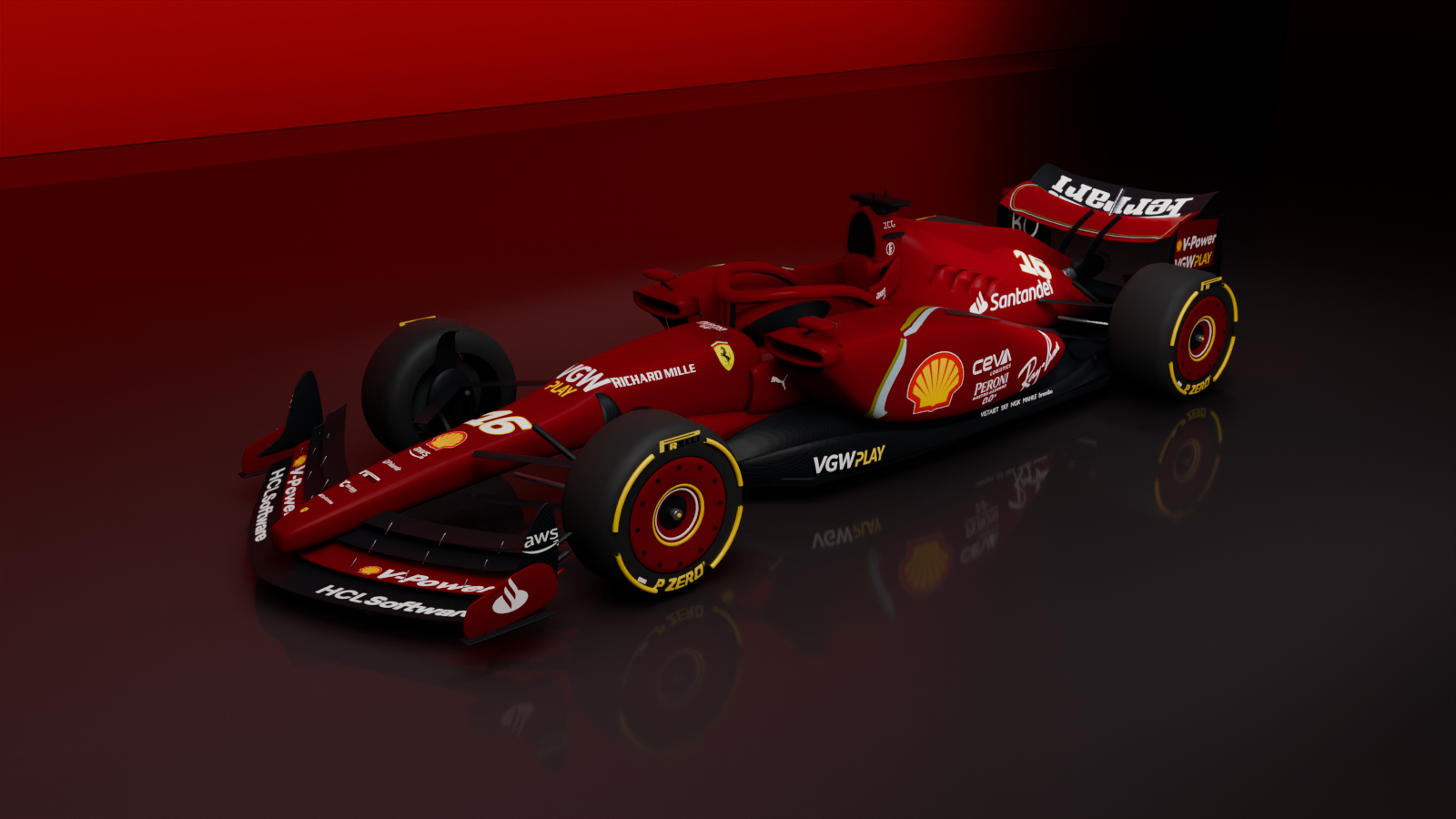
A model like that already works for marketing, such as a render of a new finish or a scene for the trade show stand. For a 3D configurator, it isn’t there yet. Up close, some shapes were still wrong, and before a model like this goes into a configurator, a 3D team needs to check the viewing angles, the materials and options, browser performance and whether it can be edited later. Given how fast the models are improving, we expect that gap to be much smaller in 2027.
2. Buyers’ AI Agents Will Start Requesting Quotes From Manufacturers
Architects and contractors already ask ChatGPT which companies to work with. In 2027, we expect them to go a step further and hand the groundwork of a purchase to AI agents: tools that carry out tasks on their own instead of only answering questions. The agent finds suppliers, checks which products fit the project and asks for prices.
Showing up in an AI answer won’t be enough anymore. Manufacturers will start getting quote requests that an agent prepared, and the ones who can answer quickly will make the shortlist. A manufacturer with a 3D configurator or CPQ software has an edge here. The product rules and prices already sit in one system, so an agent can get a valid configuration and a price in seconds instead of waiting for someone in sales to reply.
Buyers are already trying this. Deloitte’s 2026 B2B commerce research found that nearly 40% of B2B buyers already use agentic AI in purchasing – evaluating products, configuring orders, reviewing contracts, and benchmarking prices. Only 24% of suppliers use agents on their side. That gap is the problem for 2027: more and more agents will be sending questions to suppliers with nothing in place to answer them. Forrester expects AI agents to play a role in 75% of B2B purchases in 2027, often doing most of the work and stopping just short of placing the order.
Take a contractor quoting a deck with a glass railing. In 2027, they might hand an AI agent the plan and ask it to:
- find railing systems that work at a 1,100 mm guard height
- check who delivers to the site
- get prices
The agent can only include manufacturers whose product rules, stock and prices it can read. A spec sheet in a PDF behind a download form won’t make the cut. So we expect the manufacturers who move first to open their options, stock and prices to buyers’ agents through their e-commerce platform or an API, as Forrester advises.
Humans will still make the final call. In a Gartner survey of 645 B2B buyers, 69% said they prefer to check AI-generated insights with a sales rep.
3. Manufacturers Will Try Building Their Own 3D Configurators with AI
Plenty of manufacturers will vibe code a 3D configurator in 2027, but most will keep it as a prototype. A 3D configurator lets buyers and dealers configure a product in 3D and see the price in real time, while your product rules stop them from picking options that don’t work together. Behind the scenes, it turns each finished configuration into what the factory needs, like a bill of materials and CAD files. It takes a custom order from the first click to the cut list on the shop floor.
Until now, getting one mostly meant working with a configurator vendor. In 2027, we expect more manufacturers to try building one themselves with AI instead. It’s called vibe coding: you describe what you want to an AI tool and it writes the code, so one person in e-commerce with a free weekend can have a working demo by Monday.
We tried it ourselves and asked OpenAI’s GPT-6 Astra to vibe code a configurator for a table. The 3D setup, with lighting and four room styles, took about an hour, and it was the best 3D we’d seen from any AI model. Shape, finish, size and a live price all worked. Where it went wrong was the product rules. Once options depended on each other, the AI started allowing combinations that can’t be built.
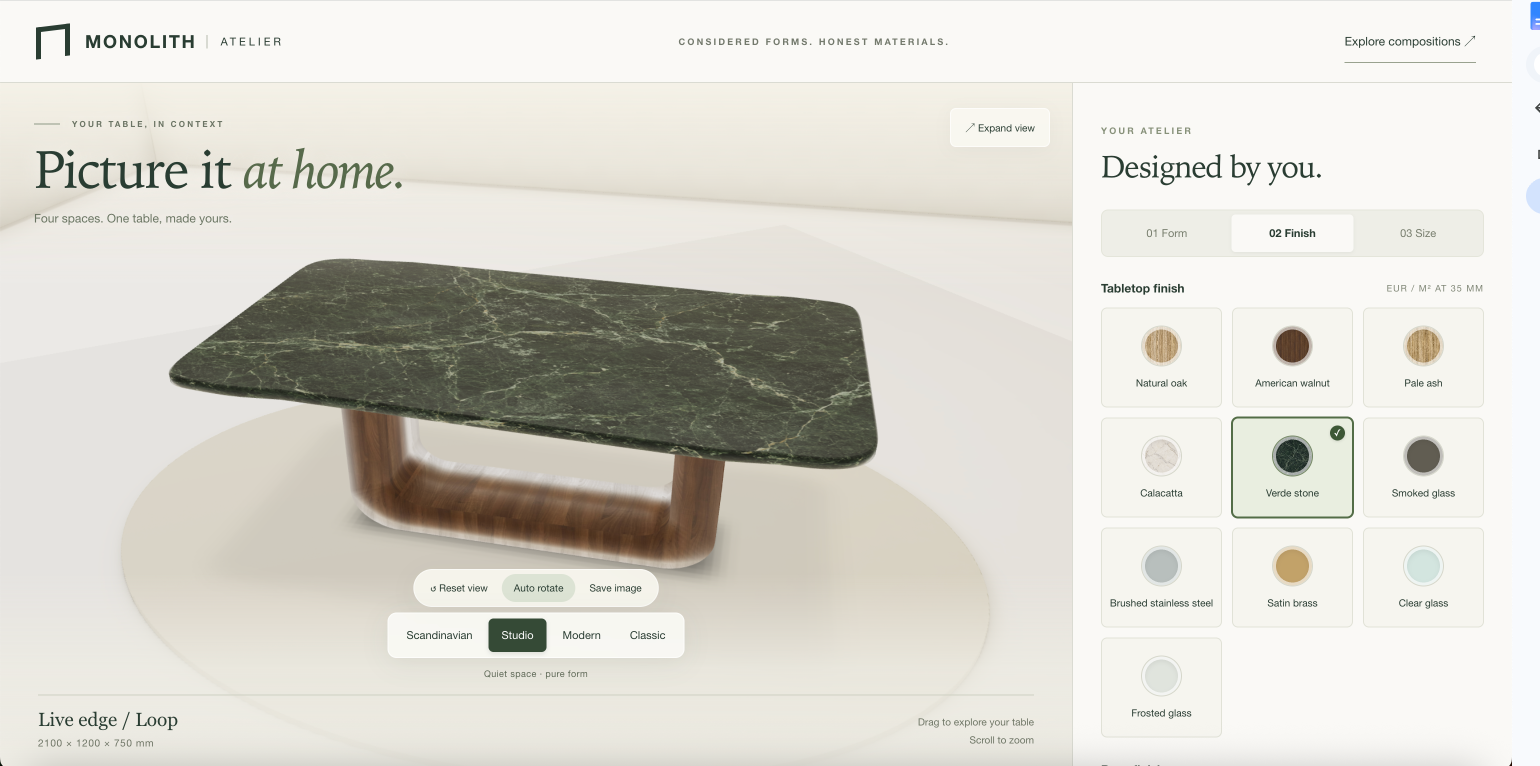
Mistakes like that should get rarer with every new model. The limits that stay have nothing to do with how good the AI gets. A configurator holds customer details and dealer pricing, and vibe-coded apps often go live with missing access rules or code nobody has reviewed, so teams tend to find the holes after a leak.
Then someone has to run it. That means keeping it online and fixing it when it breaks, because every hour it’s down is an hour buyers can’t order. Testing it on every device after each change is on you too. Add the integrations to your ERP, CRM or e-commerce store, and we expect most manufacturers to keep their vibe-coded configurator as a prototype in 2027.
4. AI Will Become the First Mentor for New Hires
In 2027, manufacturers that can’t find people with 20 years in stairs or cabinetry will hire less experienced staff and give them an AI copilot built on the company’s own know-how. The copilot sits on top of a knowledge base: past quotes, drawings and emails, plus recorded interviews with senior people. A new hire types a question and gets an answer from that material.
Finding experienced people keeps getting harder. In the NAM’s Q2 2026 Manufacturers’ Outlook Survey, 47% of manufacturers named attracting and keeping good people as one of their biggest challenges. Most already have the tools to start: in the Manufacturing Leadership Council’s 2026 survey, 70.9% said they use generative AI, and knowledge management was the most common use.
Picture a sales rep in their second week at a kitchen cabinet manufacturer. Instead of waiting for a senior colleague to have a free minute, they ask the copilot things like:
- The customer’s kitchen has a sloped ceiling. How did we handle that in past projects?
- This dealer is asking for a bigger discount. What did we agree with them last year?
The copilot only knows what was written down somewhere. If the reason behind a decision lives only in someone’s head, the AI can’t explain it either. So we also expect more manufacturers to sit their senior people down in 2027 and record how they work, while they’re still around.
5. Mid-Sized Manufacturers Will Put AI Cameras at the End of the Line
AI visual inspection will reach manufacturers with a single plant in 2027. Large factories have used AI cameras for years. What changes is that a cabinet, railing or shelving manufacturer with one plant can now set one up without a team of machine vision specialists. The camera checks each part, or each packed order, before it leaves:
- scratches, dents or the wrong color on a finished panel
- holes and cutouts in the right place
- every part and hardware bag in the box
A missing bracket found in the factory costs a few minutes. Found on the job site, it costs a second delivery and an installer who has to come back.
Quality is already where manufacturers use AI most. In Deloitte’s AI in Manufacturing 2026 survey of more than 140 manufacturers, 62% use AI in quality, more than in any other area. People miss things, too. In a Sandia National Laboratories study, trained inspectors caught 85% of defective parts and wrongly rejected 35% of good ones. Checking hundreds of similar panels a day is exactly the kind of work where attention slips.
Tools like LandingLens now say that “no prior AI knowledge is needed”: someone from the quality team takes photos of good and bad parts, marks the defects and trains the model.
6. Building Software Is Easier, but Manufacturers Will Keep Buying It
AI coding tools now let people who can’t program build their own software, and plenty of manufacturers will give it a go in 2027. Some will end up with a handy internal tool. But for the software the business actually runs on, we think most will keep paying a vendor. It’s the same story as for 3D configurators: worth trying with AI, but not something most manufacturers will run their sales on. Once real buyers, prices and orders depend on a piece of software, someone has to keep it secure, keep it online every day and fix it fast when it breaks. That’s the job a vendor is paid for, and it’s a lot of work to take on yourself.
Here’s why, based on what our CEO learned building his own app with AI:
- Building it still takes time and expertise. His app took about two months of on-and-off work and more than 40,000 lines of code he has never read, and it still isn’t finished. A friend who had never written code built an app in six weeks, then got stuck for months on the last 10–20%.
- The code is the small part. A software subscription also pays for a safe place for your data, with backups, access controls and an audit trail.
- The rules keep changing. Vendors update their software when tax and privacy rules change. With a homemade app, that’s your job.
- Someone has to be on call. When something breaks, the vendor has people ready to fix it around the clock.
- Vendors are using AI too. They’re making their own products better and cheaper, so building your own gets less attractive, not more.
What This Means for Your 2027 Plans
So, will manufacturers stop outsourcing in 2027? Partly. AI makes a first version of a lot of work cheap enough to try in-house, from product visuals to small internal tools. Where each company draws the line will depend on its products and on what a mistake would cost. These questions can help you and your team work out where your line sits:
- What happens if it goes wrong? A render with a slightly off shape costs you nothing. A configurator that lets a buyer order a 2,400 mm tabletop on a base made for 1,800 mm costs you a remake, and maybe the customer.
- Who looks after it next year? Building something with AI is the quick part. Someone still has to keep it running, update it and fix it when it breaks, and that time rarely shows up in the first estimate.
- Can a buyer’s AI agent get a price from you? Ask an AI assistant to find and price one of your products the way a contractor would. What comes back shows how much of your catalog an agent can actually read.
- Where does your know-how live? If the answer is one person’s head, no AI tool can pass it on to a new hire yet. Getting it written down is work only your own team can do.
- Which mistakes reach your customers today? A missing bracket or a wrong finish that gets past the factory is exactly the kind of problem AI cameras are built to catch.
Want to see how this could work for your products?
Book a demoFAQ
What are the biggest AI trends for manufacturers in 2027?
Manufacturers will make more of their own 3D models with AI, buyers’ AI agents will start requesting quotes, and more companies will try building their own 3D configurators. AI copilots will help train new hires, AI cameras will check orders before they ship, and most companies will keep buying the software their business runs on, even as building it gets easier.
Will manufacturers stop outsourcing because of AI?
Partly. AI makes a first version of a lot of work cheap enough to try in-house, from product renders to small internal tools. Work where a mistake reaches buyers, orders or the shop floor will mostly stay with specialists, because building it is only a small part of the job.
Can AI create 3D models of my products?
Yes, as a starting point. In our test, an AI agent built a recognizable 3D model from photos in about 20 minutes and reached a 95% similarity score after 12 hours. That’s good enough for marketing renders, but a 3D specialist still needs to check the details before the model goes into a configurator.
How will AI agents change B2B buying in 2027?
They’ll do more of the groundwork before a buyer talks to a supplier. Forrester expects AI agents to play a role in 75% of B2B purchases in 2027, often stopping just short of placing the order. Manufacturers whose options, stock and prices an agent can read are more likely to make the shortlist.
Can I build my own 3D configurator with AI?
You can build a working demo. In our vibe coding test, the 3D setup for a table configurator took about an hour, but the AI started allowing combinations that can’t be built once options depended on each other. A version buyers order from also needs security, someone to keep it running and a connection to your ERP, so we expect most AI-built configurators to stay prototypes in 2027.
How can AI help with the manufacturing labor shortage?
It can help new hires get up to speed without waiting on a senior colleague. In the NAM’s Q2 2026 Manufacturers’ Outlook Survey, 47% of manufacturers named attracting and keeping good people as one of their biggest challenges. A company knowledge base with an AI copilot on top lets a new sales rep look up how past jobs were handled, as long as someone wrote it down first.
Is AI visual inspection realistic for smaller manufacturers?
It’s getting there. Quality is already where manufacturers use AI most: 62% of companies in Deloitte’s AI in Manufacturing 2026 survey use it there. No-code tools now let a quality team train a camera on photos of its own defects, so a manufacturer with one plant can test it on a single check, like missing hardware, before committing to more.