


5 Innovations Shaping the Future of Furniture Sales
Discover 5 innovations transforming how modular and custom furniture is sold online. From furniture customizers to AI assistants, see what’s driving the future of furniture sales.
 Camille Felappi

As the furniture industry moves toward greater modularity and customization, manufacturers are facing increasing pressure to modernize how they sell. Traditional showrooms and PDFs no longer meet buyer expectations. Especially in a market where product variations number in the thousands.
To address this complexity, new technologies are being adopted across the sales process. From how products are configured and visualized to how they’re quoted and presented online. This article highlights 5 innovations that are reshaping the way custom furniture is bought and sold today.
1. Furniture Customizers Are Becoming a Standard Sales Tool
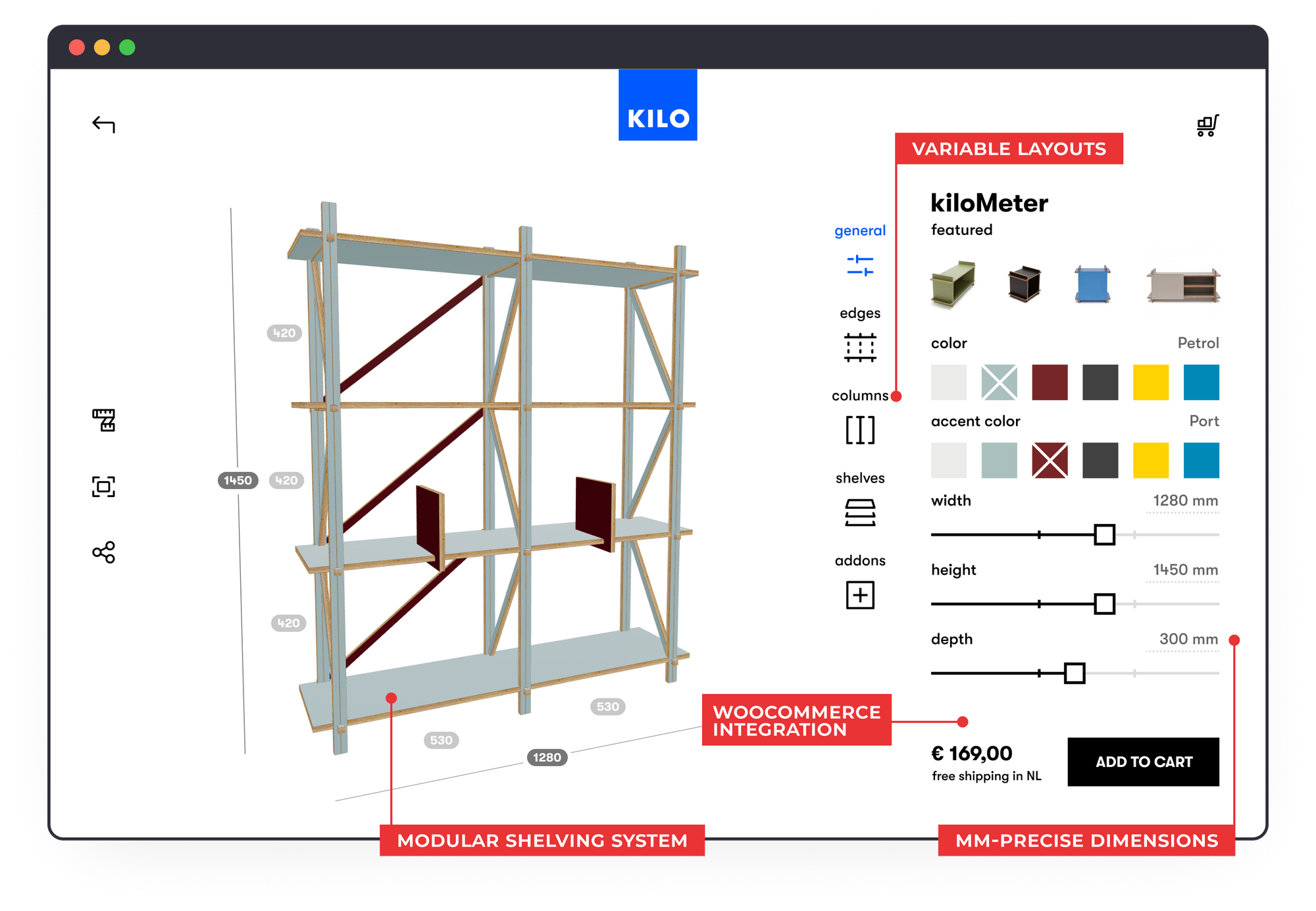
Modular and custom furniture is designed to be flexible. A single product might have thousands of combinations depending on layout, dimensions, materials, or components. That flexibility is the core value, but it’s nearly impossible to communicate through static product pages or downloadable catalogs.
Quick stat: 70% of consumers shopping for furniture begin the process online.
This gap has made furniture customizers an essential sales tool. A furniture customizer lets buyers assemble a product by selecting options such as size, materials, and features. As they select options, they interact directly with a 3D model that updates in real time. This gives buyers a clear understanding of what they are creating and how each decision affects the final product. Without relying on a sales rep.
2. AI Assistants Are Emerging as the New Sales Reps
AI assistants are beginning to take on the role of digital sales reps in furniture eCommerce. Rather than browsing filters or waiting for human support, buyers interact with an AI assistant. It asks structured questions, filters out invalid options, and guides the buyer through decision-making that would otherwise require product knowledge or sales support.

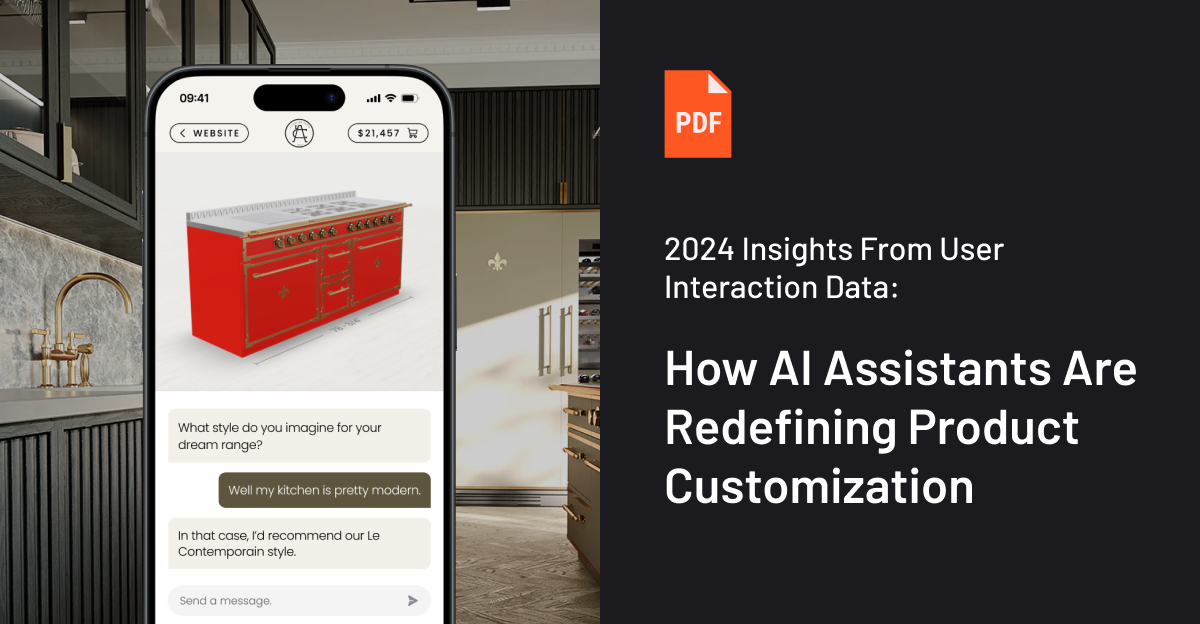
What sets it apart is that the AI assistant doesn’t just guide. It executes changes in real time, updates configurations, and ensures the result is valid and priced correctly. For manufacturers dealing with complex modular systems, this represents a shift: from static interfaces to a more conversational, intelligent one that simplifies the path to purchase. Adoption is still early, which makes this an opportunity for manufacturers to position themselves as early movers.
Quick stat: Over 50% of businesses are now incorporating AI into their e-commerce strategies, with 69% seeing an increase in sales as a result.
3. Parametric Models Are Reshaping Customization at Scale
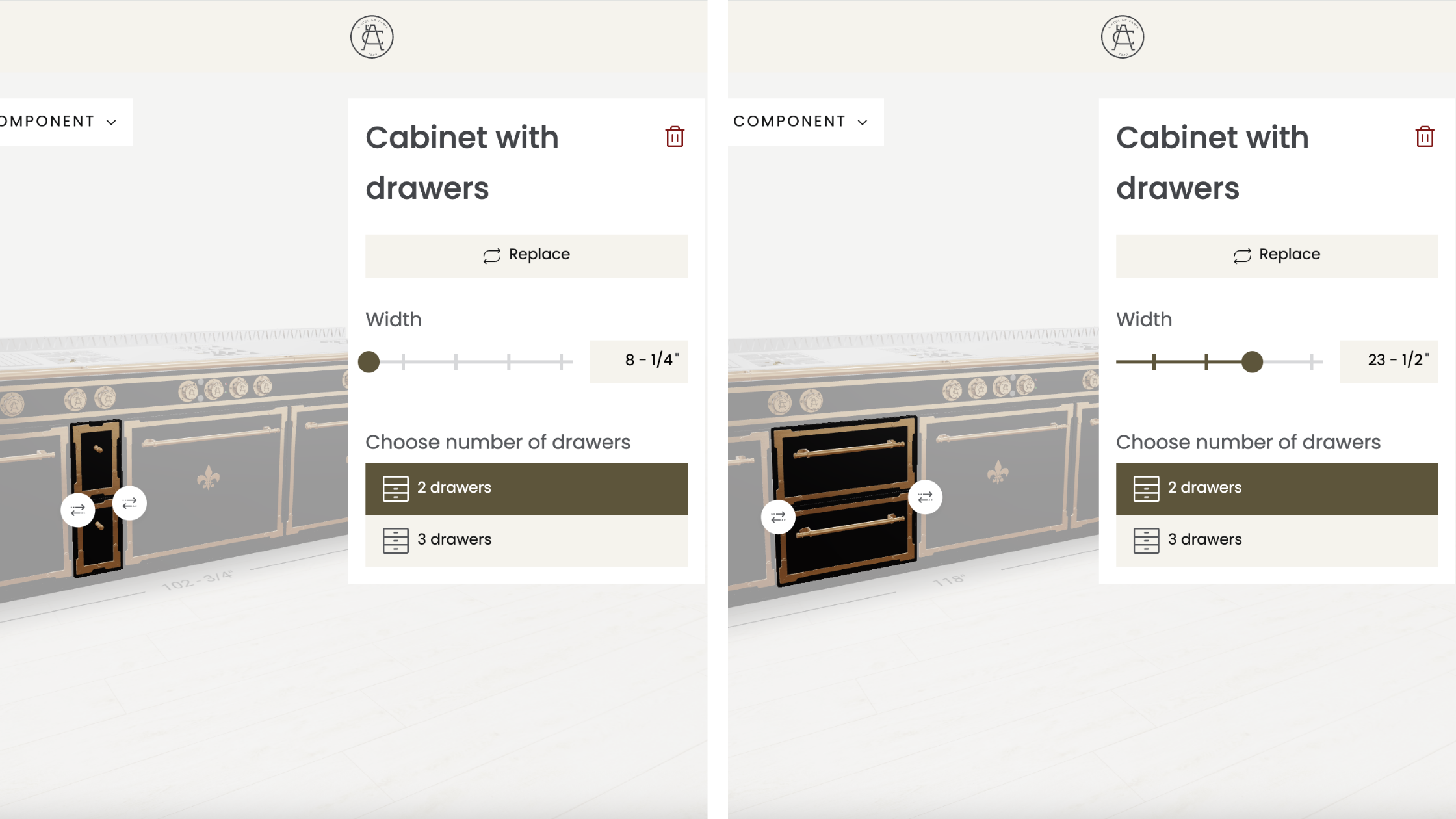
Parametric models offer a more efficient way to handle product customization without the need to create thousands of fixed variants. Instead of defining every possible version of a product in advance, rules are built into the product model, allowing it to adjust automatically based on the buyer’s input. This approach is becoming easier to implement in customer-facing web applications, providing a seamless experience for both manufacturers and buyers.
For example, when a buyer changes the width of a table, the model also updates the number of legs and their spacing, all while staying within design and production limits. This makes it possible to offer fully custom dimensions, layouts, or combinations while keeping control over what’s actually manufacturable.
This is especially valuable for modular products, such as shelving, office desks, or built-ins, where even minor adjustments need to ripple through multiple parts.
4. Virtual Showrooms Are Extending the Reach of the Sales Floor
For years, the showroom was the main environment where buyers could see and understand a product in context. That model doesn’t scale well in a market where sales are increasingly global, hybrid, or entirely online. Virtual showrooms now offer a way to present full collections in realistic, navigable environments that work directly in the browser.
Unlike flat product listings, virtual showrooms let buyers move through spaces, view furniture at scale, and explore pieces as part of styled settings. This gives manufacturers more control over how products are presented, without the limits of geography, real estate, or opening hours. Especially for high-ticket, modular, or space-sensitive furniture, it creates the kind of spatial understanding that static tools can’t offer.
Quick stat: 72% of customers see the value of virtual showroom tours
5. Virtual Photography Is Replacing Traditional Shoots
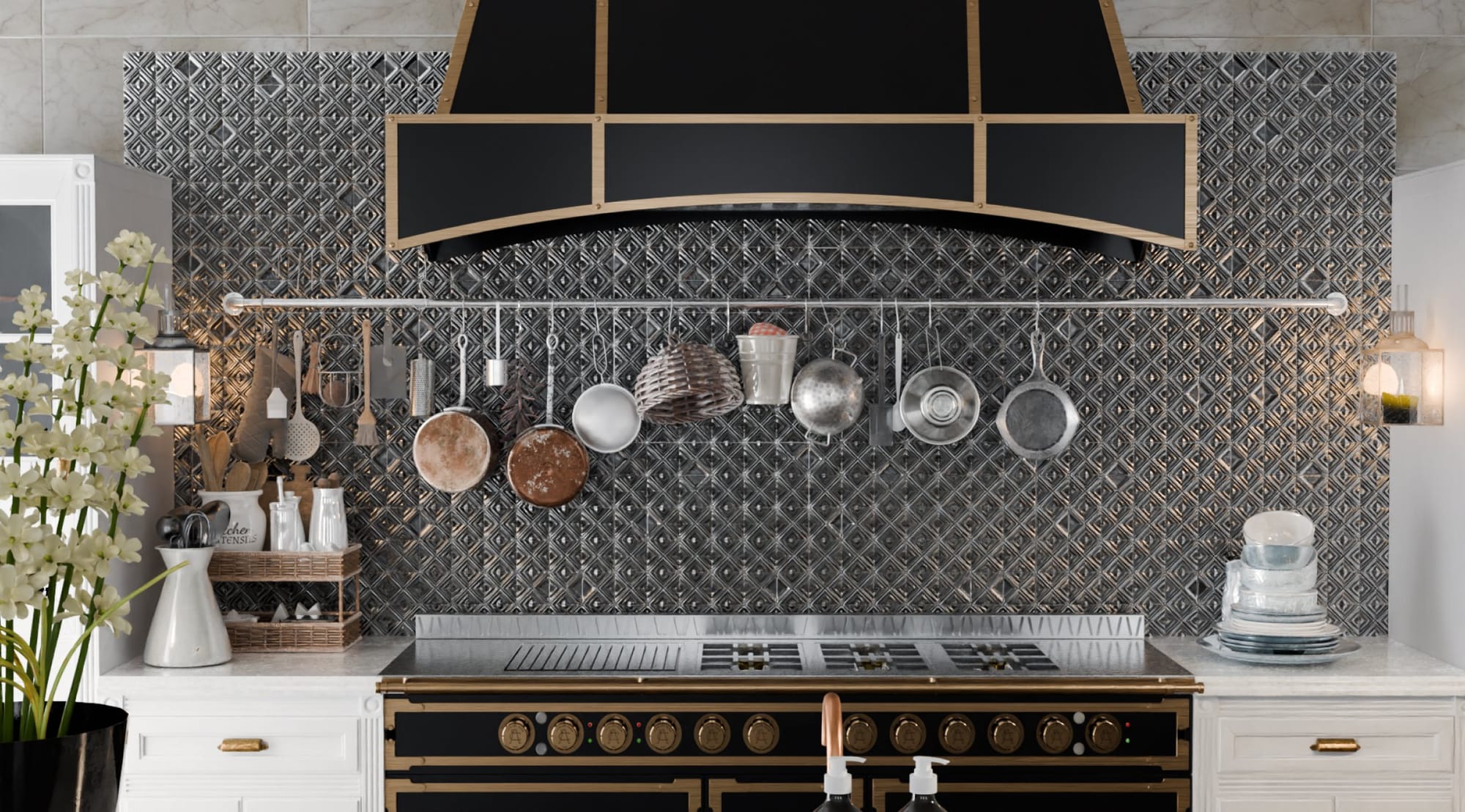
Customizable products require a huge volume of visual content. For every combination of size, finish, and layout, manufacturers need images that show the product clearly and consistently. Traditional photography can’t keep up. It’s slow, expensive, and often impossible when physical samples don’t yet exist.
Virtual photography replaces cameras with rendering engines. Using the same 3D product models used in configurators, manufacturers can get high-quality, photorealistic images for every product variant. This reduces production bottlenecks and ensures visual consistency across sales channels, which is especially important when products are sold through both direct and partner networks.
Last Thoughts
Every innovation in this article responds to the same pressure: furniture products have become more flexible, and the tools used to sell them need to catch up. Static images and fixed variants were built for a different kind of product. They don’t work when one item has thousands of valid combinations, and buyers expect to explore those options on their own.
Manufacturers who adopt these innovations early are not just modernizing their workflows. They are building a foundation for long-term competitiveness.The sooner manufacturers align with them, the more room they have to lead rather than react.

Camille Felappi
Camille is a B2B digital marketing specialist, focusing on SEO and content creation. She helps businesses connect with their target audience using data-driven and creative strategies.
Personalized demo with our VP
Stop Losing Deals to Confusing Catalogs
Book a 30-minute call – bring one product, leave with a working 3D configurator prototype and a clear implementation timeline.



Bring one product link – leave with a clear next step.






























Related Articles

63% of Cabinet Websites Hide Their Pricing. Why Yours Shouldn't.
63% of cabinet websites hide pricing and lose buyers on the first click. Here are four ways to show a price online, even for made-to-order cabinets.

Top 10 Best Furniture Configurator Software of 2026
We compared the best furniture configurator software of 2026 based on what matters most: 3D visualization, configuration depth, CPQ capabilities, integrations, and long-term business value.

We Analyzed 120 Storage and Cabinet Websites. 73% Are Doing It Wrong (& How to Fix it)
Only 5% of storage and cabinet websites offer 3D configurators, while 73% create unnecessary friction through poor customization tools, hidden pricing, or sales-only purchase paths. Here's what the data reveals and how to fix it.