7 Best Zakeke Alternatives in 2026
Zakeke is one of the most popular product customization platforms for ecommerce. But popularity does not mean it is the right fit for every business. This guide compares seven alternatives by features, pricing, and trade-offs.
 Camille Felappi
The best Zakeke alternatives in 2026 are Salsita for complex, modular, and made-to-order products, Threekit for enterprise visual commerce, Expivi for standardized configurable products, Kickflip for Shopify personalization, Cylindo for furniture visuals at scale, Dopple for ecommerce visual merchandising, and Simplio3D for entry-level 3D configuration. Which one is right depends on how complex your products are, how your pricing works, and what has to happen after the order.
Zakeke is often the first product customization platform that ecommerce brands discover. The pricing is transparent, setup is fast, and it plugs straight into Shopify, WooCommerce, and other popular storefronts. For brands selling products that shoppers personalize with text, images, or color swaps, it does the job.
The trouble starts when products get more complex. A product configurator that works for phone cases and t-shirts does not necessarily work for modular furniture, custom railings, or made-to-order kitchens. And that is exactly where many brands find themselves – needing more configuration depth, or production-ready outputs that Zakeke is not designed to deliver.
This guide covers seven Zakeke alternatives, organized by the type of business each one fits best. We explain what each platform does well, where it falls short, and why Salsita stands out as the strongest option for brands moving beyond basic personalization into advanced 3D product configuration.
Why Brands Are Looking for Zakeke Alternatives
Brands often discover Zakeke during their research, dig into the features, and realize it is not built for what they actually need. Their products are too complex, their pricing logic too dynamic, or their workflow requires manufacturing outputs that Zakeke was never designed to handle. Others do start with Zakeke and reach its limits later.
Here is what comes up most often in G2 reviews, Capterra feedback, and conversations with buyers evaluating alternatives:
- 3D and visual experience has limits. Zakeke's WebGL-based 3D engine works, but multiple G2 reviewers describe the overall experience as dated. One verified reviewer noted that "some parts of the system feel outdated and not as intuitive or modern as I would expect from a tool in this category." Another called the software "a little outdated with some of the basic features." For brands where the configurator needs to reflect the quality of the product, this visual gap can hurt.
- Shallow configuration logic. Swapping colors, adding monograms, or uploading a logo works well with Zakeke. But when products involve dependencies between components, modular assemblies, or rules that constrain what can be combined with what, the platform hits its ceiling. One reviewer summarized it as "useful and robust, but not robust enough."
- Print-ready, but not production-ready. Zakeke generates print-ready files: PDFs and production files suited for printing and engraving workflows. What it does not generate are manufacturing-grade outputs. No CAD files (STEP, DXF), no CNC-ready G-code, and no automated bill of materials. For brands selling products that need to be fabricated or assembled after the order, there is a manual gap between what the buyer configures and what the production team receives.
- Limited interface control. Several reviewers want more freedom to shape how the configurator looks on their site. One noted the UI "is not 100% customizable to perfectly match the look and feel of my website." Another wished for "more options to change how the customiser looks," including layout changes like side-by-side views. For brands with strong visual identities, the templated approach can feel restrictive.
What Are the Alternatives to Zakeke for 3D Product Configuration?
| Platform | Best For | Strength | Price |
|---|---|---|---|
| Zakeke | SMB ecommerce personalization | Quick deployment for text, image, color, and print-on-demand customization | $ |
| Salsita | Best overall Zakeke alternative | Advanced 3D configuration with AI, parametric models, CPQ, and manufacturing outputs | $$$ |
| Threekit | Enterprise visual commerce | High-end 3D rendering, guided selling, AR, and enterprise-scale CPQ | $$$$$ |
| Expivi | Mid-market configurable products | 3D visualization paired with pricing rules and design-to-print for ecommerce | $$ |
| Kickflip | Shopify product personalization | Lightweight, Shopify-native customizer with clean live preview | $ |
| Cylindo | Furniture visualization at scale | Pre-rendered photorealistic imagery and asset management for furniture brands | $$$ |
| Dopple | Ecommerce visual merchandising | Higher-fidelity 3D configurator with AR and analytics for ecommerce | $$ |
| Simplio3D | Entry-level 3D configuration | Self-service 3D configurator for simple products and WooCommerce | $ |
1. Salsita: Best Overall Zakeke Alternative
Salsita is a 3D product configurator built for companies whose products outgrow personalization: modular systems, custom dimensions, dependency rules, and orders that have to reach a production floor.
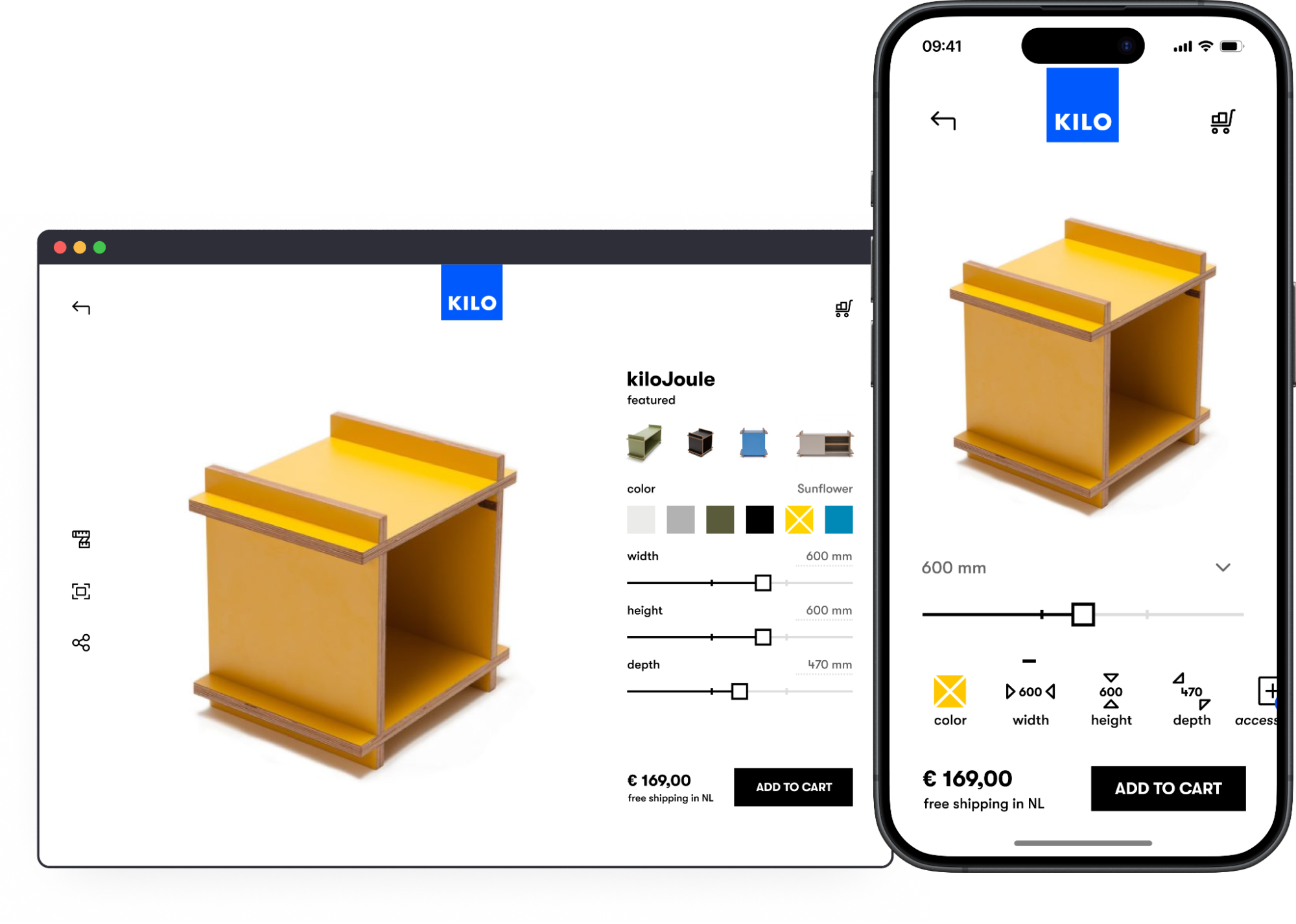
Companies selling complex, modular, or made-to-order products across direct-to-consumer ecommerce, dealer channels, and internal sales workflows.
Salsita Key Features
- Parametric models that support millimeter-level precision and dynamic resizing
- Modular configuration engine for multi-part products and full-room layouts
- Visual CPQ with live pricing, multi-currency support, and PDF/email quote sharing
- AI-powered assistant that interprets natural language and applies configuration changes
- Production-ready outputs: BOMs, CAD files, cut sheets, and assembly instructions
- Open integration layer for ecommerce, ERP, CRM, and PIM systems
Pros
- Covers the full path from buyer interaction to factory floor, not just the visual layer
- Configuration logic handles multi-level dependencies and rules that Zakeke cannot
- AI assistant turns the configurator into a guided selling tool, not just a product picker
- Real-time photorealistic 3D that reflects the quality premium brands expect
- Works across buyer types (end customers, dealers, and sales teams) in one deployment
Cons
- Product logic and configuration rules need to be defined beforehand
- Setup is collaborative, not self-serve, because Salsita builds alongside your team
- More capability than brands with simple product catalogs actually need
Salsita stands out because it covers the full workflow that Zakeke leaves open. Configuration logic, parametric precision, visual CPQ, AI-assisted selling, and production-ready outputs like BOMs and CAD files all live in one platform. Most alternatives in this guide handle one or two of those well. Salsita connects them, from the buyer's screen to the production floor, without requiring your team to stitch separate tools together.
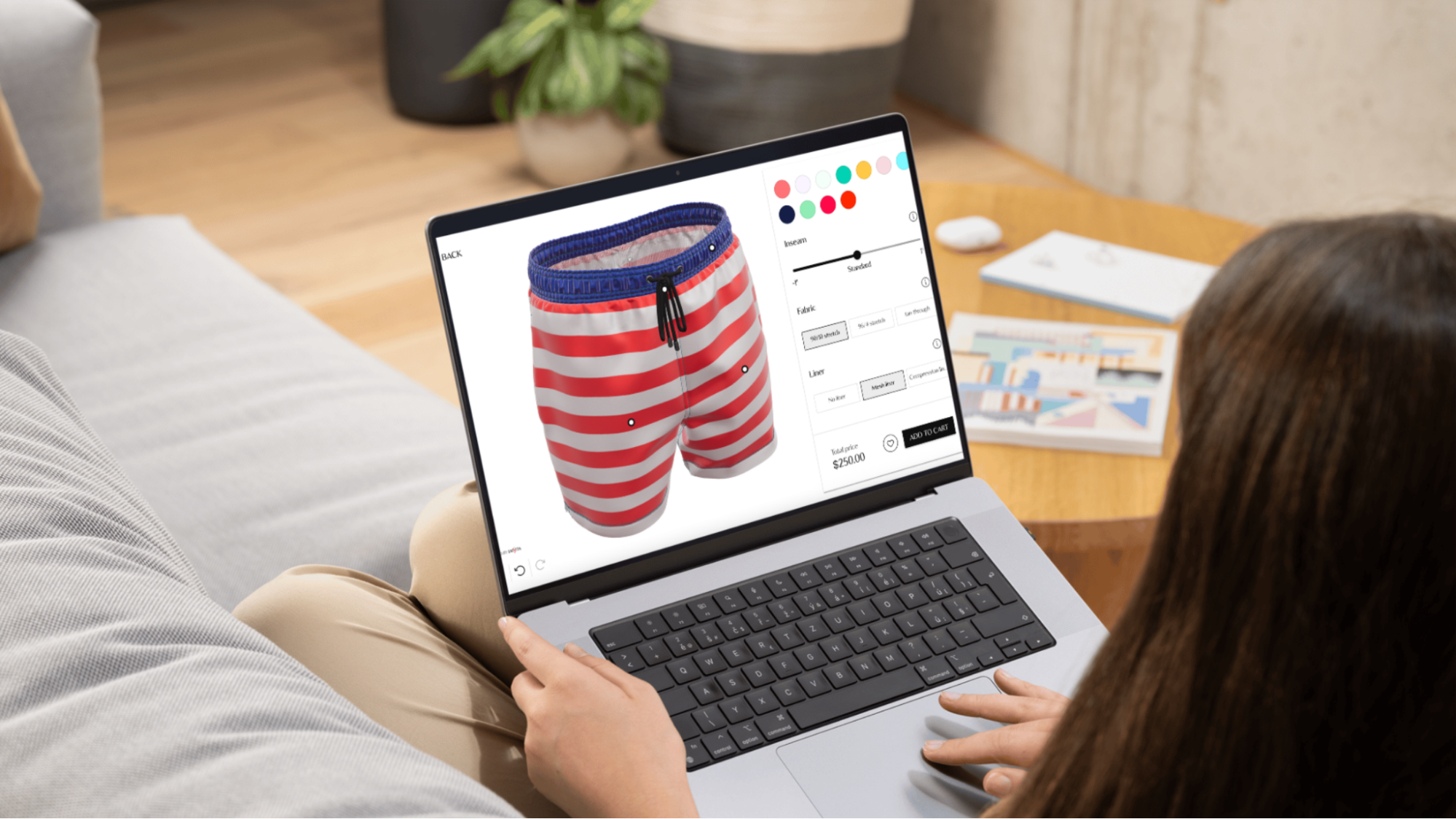
2. Threekit: Alternative for Enterprise Visual Commerce
Threekit targets large organizations that need a full-stack visual commerce platform backed by dedicated technical teams and significant budgets.
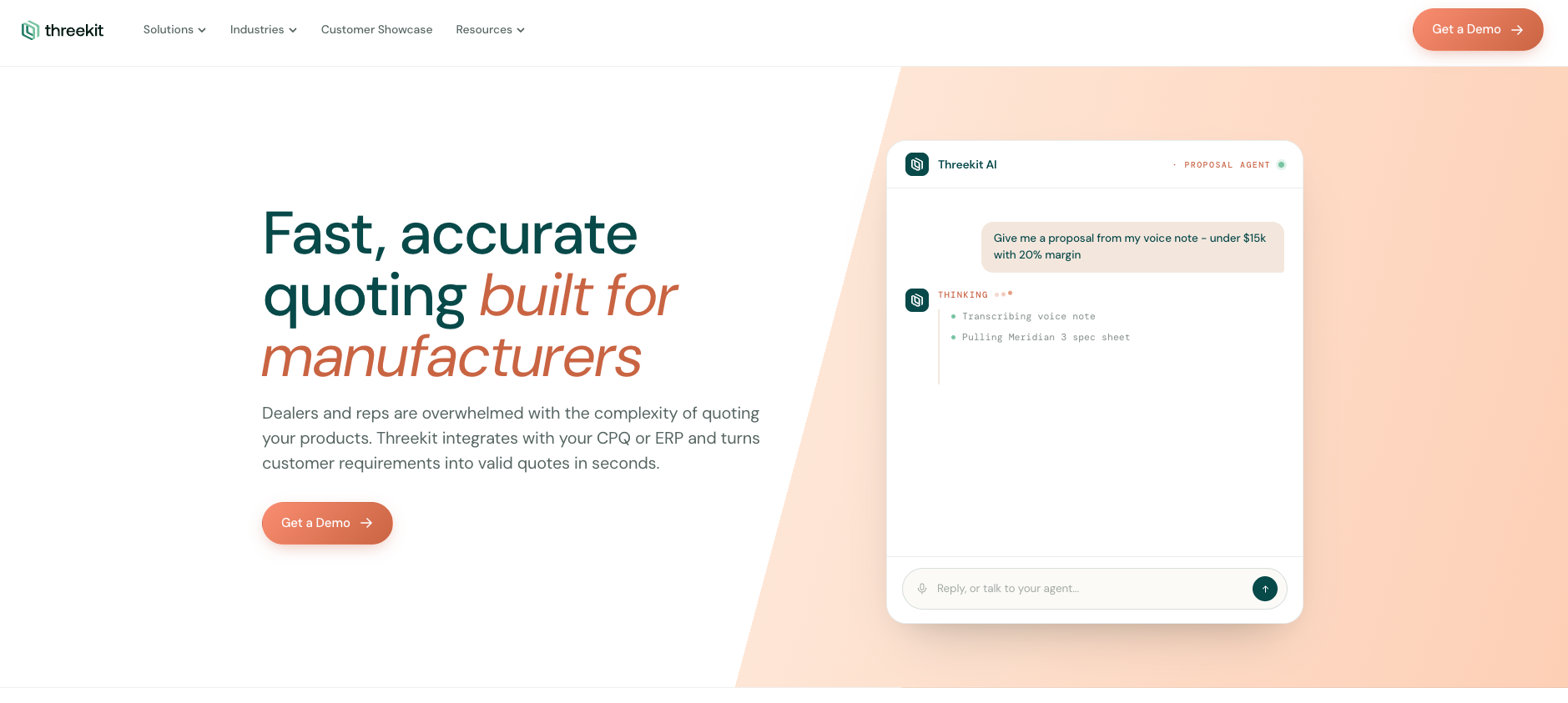
Enterprise companies managing large product catalogs with in-house technical resources and the budget for a premium, long-term platform investment.
Threekit Key Features
- AR for placing configured products into real-world environments
- Guided selling workflows that walk buyers through complex product selection
- Enterprise CPQ with pricing rules, discount logic, and approval chains
- Integrations with Salesforce, SAP, and other enterprise ecosystems
Pros
- Delivers rendering quality at the top of this category
- Handles large SKU counts and complex variants
- Generates manufacturing documentation alongside the visuals
- Scales to enterprise catalogs and traffic
Cons
- Premium enterprise pricing
- Long rollout timelines
- Less flexible for brands that need rapid iteration
- Cost and complexity that mid-market teams struggle to justify
Threekit is a clear step up from Zakeke in visual quality and configuration depth. But the price tag and rollout timeline put it out of reach for most brands that are actively outgrowing Zakeke. Salsita delivers comparable configuration depth at a lower cost and with a more agile setup.
3. Expivi: Alternative for Standardized Configurable Products
Expivi is a Zakeke alternative for mid-market ecommerce brands that need 3D visualization with built-in pricing for standardized configurable products.
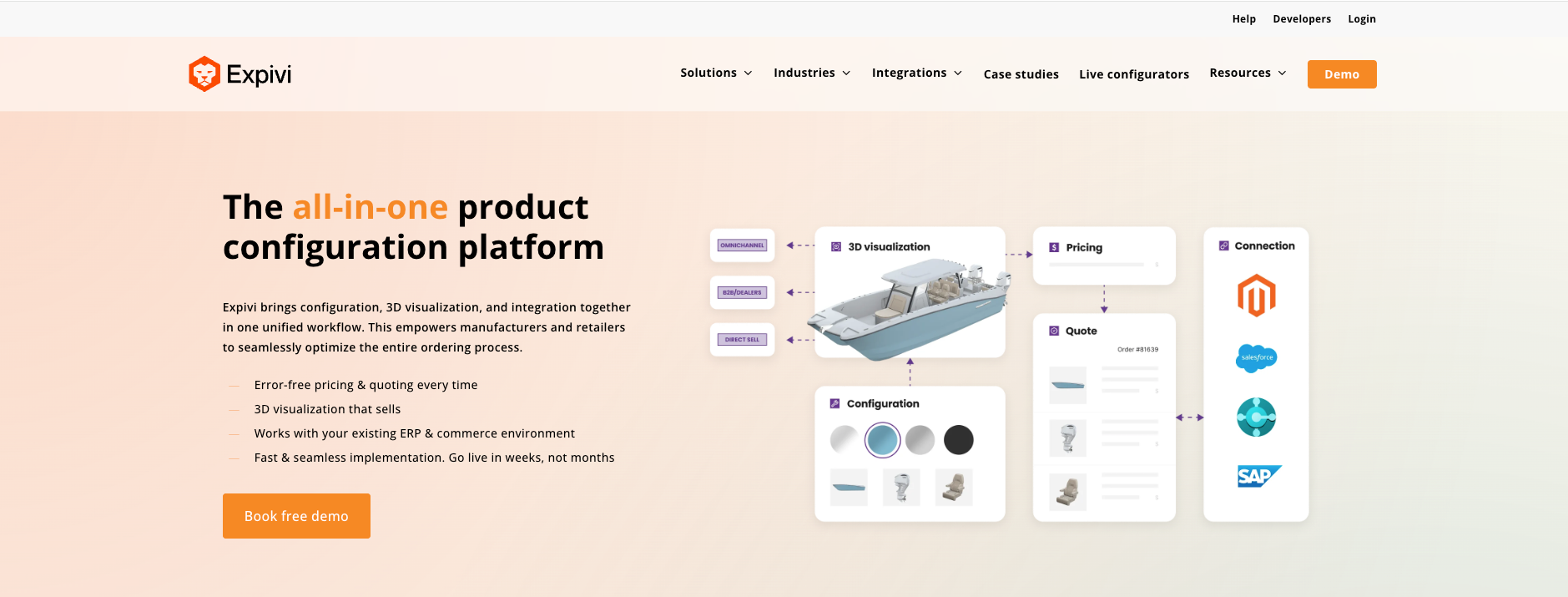
Ecommerce brands selling configurable products with predefined options, where integrated pricing matters but parametric modeling and manufacturing automation are not priorities.
Expivi Key Features
- Integrated CPQ that calculates pricing as buyers configure
- Design-to-print output for customized products
- Integrations for major ecommerce platforms
- ERP and PIM integration support
- Browser-based AR for product preview
Pros
- Includes CPQ with live pricing, which Zakeke lacks
- Ecommerce-first deployment model
- Accessible pricing for mid-market brands
Cons
- Limited flexibility for highly complex, rule-heavy product logic
- Parametric modeling is available but less refined for advanced use cases
- Production-oriented outputs are not as developed as dedicated manufacturing platforms
- Less suited for products with fully modular, made-to-measure requirements
Expivi handles 3D product configuration well for standardized configurable products. Its manufacturing outputs exist, but they stop short of what platforms built for complex and made-to-order workflows deliver. For brands that need parametric precision, modular configuration, or production-ready outputs, Salsita is the stronger choice.
4. Kickflip: Alternative for Shopify Product Personalization
Kickflip is a Zakeke alternative for Shopify stores that need lightweight product personalization with a live preview.
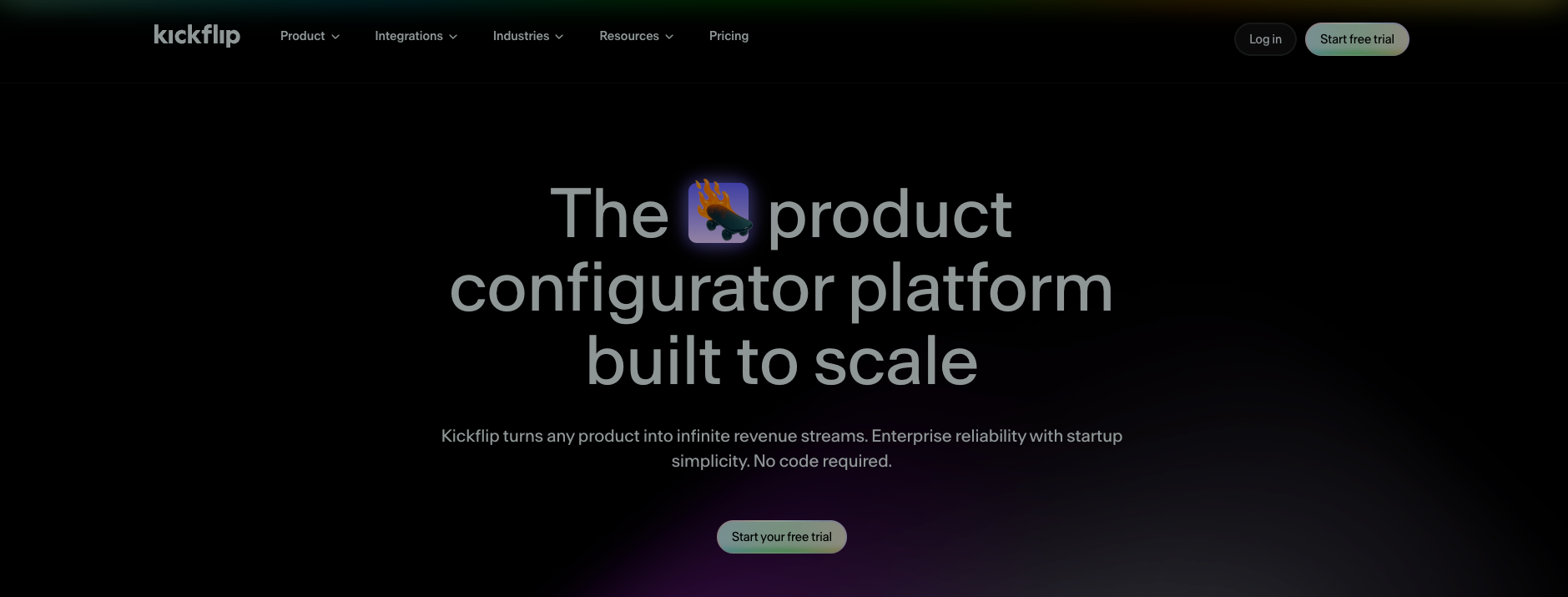
Shopify stores selling products where the customization is straightforward: choose a color, add your name, upload a design, and buy.
Kickflip Key Features
- Real-time visual preview of personalized products
- Customization options for text, images, colors, and layered designs
- Built natively for Shopify with tight storefront integration
- Simple admin interface for managing products and options
Pros
- Fast setup on Shopify
- Clean shopper-facing interface
- Focused feature set with little to manage
Cons
- Limited to Shopify, WooCommerce, and Wix, so custom or enterprise platforms are out
- No AR or immersive product visualization
- No pricing logic or CPQ capabilities
- Cannot generate print-ready files or connect to a production workflow
- Not designed for products with any meaningful configuration complexity
Kickflip handles basic Shopify personalization, but it is not a path forward for growing product complexity. The moment you need 3D, pricing rules, or anything beyond surface-level customization, you will need a different platform. For Shopify brands that need real configuration depth, Salsita is the better long-term choice.
5. Cylindo: Alternative for Furniture Visualization at Scale
Cylindo is a Zakeke alternative for furniture brands that need product visualization and digital asset management at scale, rather than interactive, rule-driven configuration.
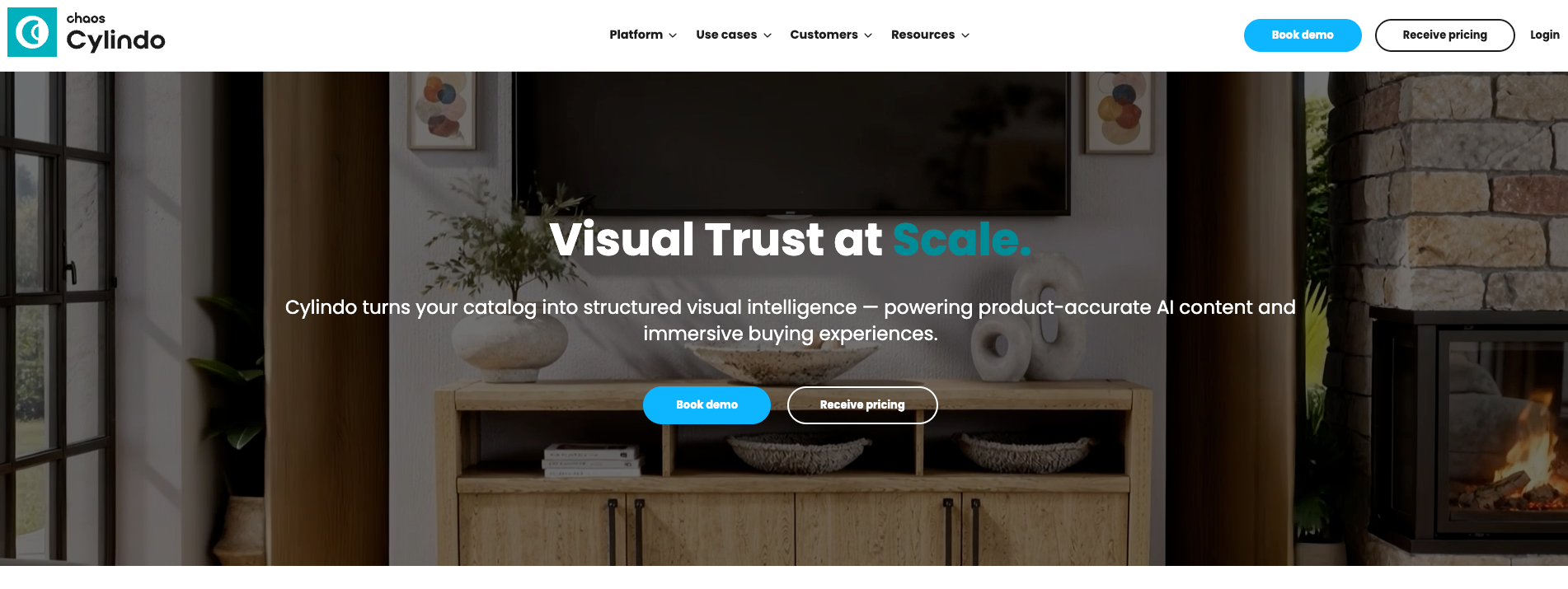
Furniture and home goods brands that need consistent product visuals across ecommerce, advertising, and retail channels, for products with a defined set of variants.
Cylindo Key Features
- Centralized digital asset management for product imagery
- Automated rendering pipelines for large product catalogs
- Multi-channel distribution of visual content
- AR product preview for in-room visualization
Pros
- Visual output suited for furniture marketing and ecommerce
- Asset management built for large catalogs
- Automated rendering across product variants
Cons
- Pre-rendered images rather than real-time 3D modeling
- All configurations must be defined and rendered in advance
- Cannot handle custom dimensions or free modular configuration
- Limited configuration logic for products with many variables
Cylindo is a good Zakeke alternative when your priority is high-quality furniture visuals for marketing and ecommerce. But its pre-rendered image approach makes it less suitable for custom dimensions, modular configurations, or made-to-order products where buyers need flexibility beyond pre-defined options. This is where a real-time, configuration-first platform like Salsita pulls ahead.
6. Dopple: Alternative for Ecommerce Visual Merchandising
Dopple is a Zakeke alternative for consumer and lifestyle brands that want a higher-fidelity 3D product configurator with photorealistic rendering and analytics on their ecommerce site.
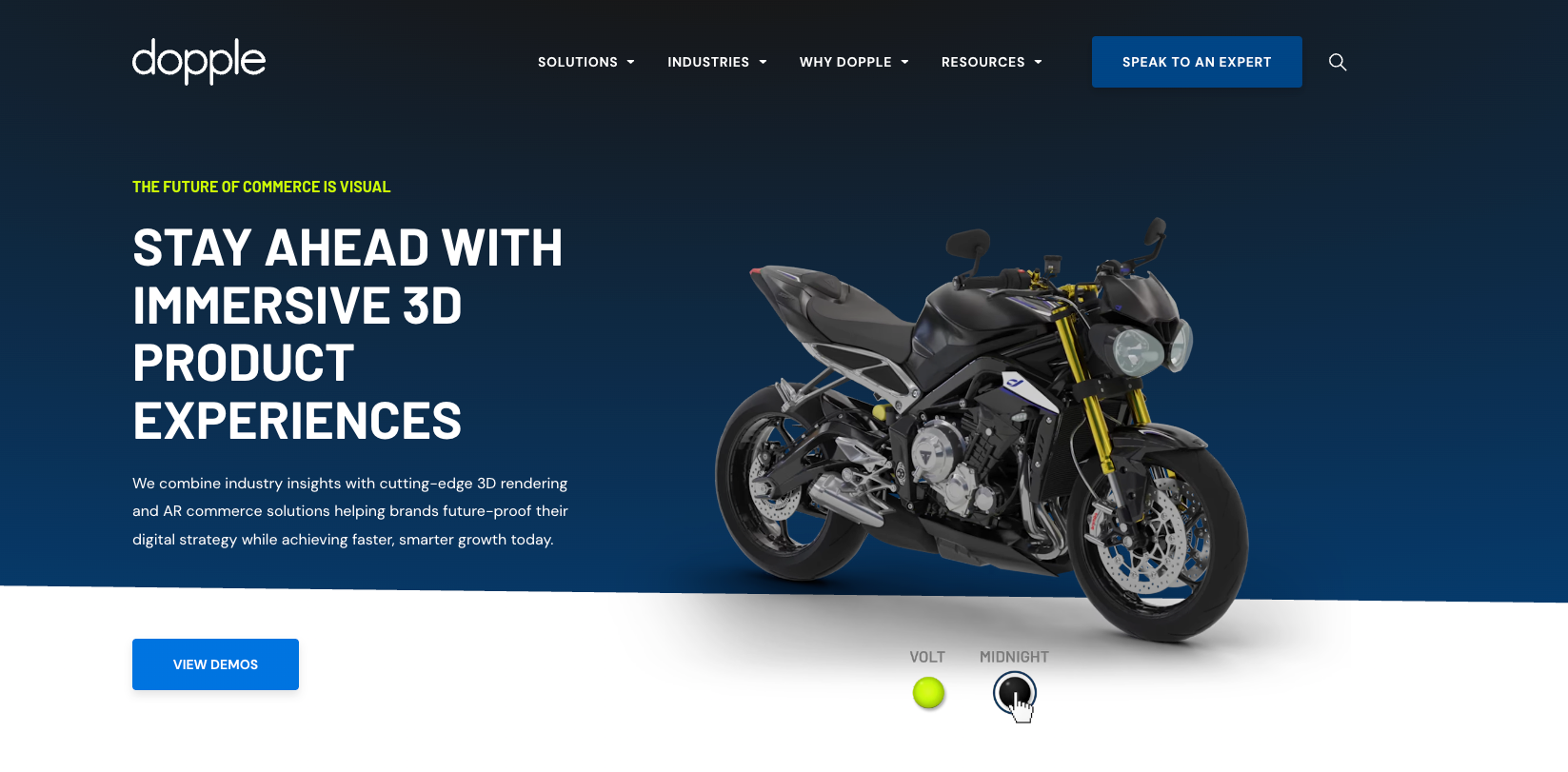
Consumer goods, lifestyle, sporting goods, and home brands that sell configurable products through ecommerce and want a managed, polished 3D buying experience.
Dopple Key Features
- Real-time 3D product configurator for colors, materials, and predefined options
- Photorealistic digital twin rendering with 4K textures
- Browser-based AR for product placement (no app required)
- Ecommerce integrations with Shopify, WooCommerce, Magento, and BigCommerce
- Analytics tracking 3D interaction data and configuration behavior
Pros
- Higher rendering fidelity than Zakeke for product detail pages
- Analytics on how buyers interact with 3D models and which configurations convert
- Managed service approach reduces internal 3D workload
Cons
- Not designed for complex product rules, CPQ workflows, or BOM generation
- Limited support for parametric or engineering-driven configurations
- Requires professionally prepared 3D models to achieve high visual quality
- Focused on predefined options, not deep product logic or manufacturing output
Dopple delivers a more polished 3D ecommerce experience than Zakeke for consumer brands selling products with predefined configuration options. But it does not handle complex product rules, dynamic pricing, or manufacturing outputs. For brands whose configuration needs go beyond visual merchandising into production-connected workflows, Salsita is the stronger platform.
7. Simplio3D: Alternative for Entry-Level 3D Configuration
Simplio3D is a Zakeke alternative for ecommerce teams that want to test interactive 3D product configuration without a large rollout. It works for simple products, basic pricing logic, and WooCommerce cart flows.
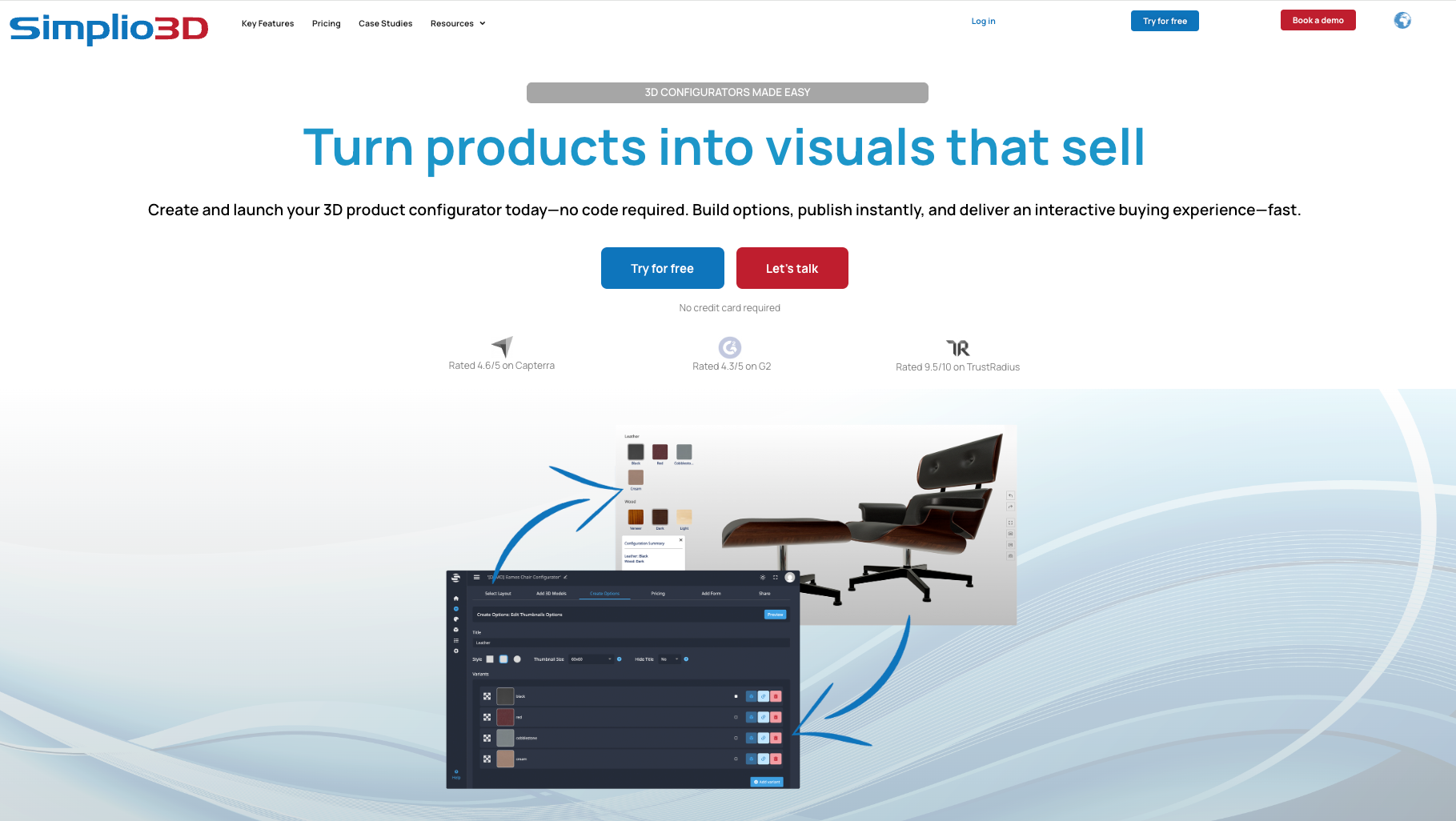
Ecommerce brands testing 3D product configuration for simple products.
Simplio3D Key Features
- WooCommerce and WordPress support
- Add-to-cart support for WooCommerce
- Dynamic pricing
- Conditional logic and restrictions
- Ecommerce and API integration options
Pros
- Affordable entry point
- Faster setup than advanced configurator platforms
- Low technical barrier
Cons
- Basic rendering quality
- Limited scalability
- Simple rule engine
- No manufacturing outputs
- Performance issues with complex models
Simplio3D is a practical entry-level option for ecommerce brands testing 3D configuration, pricing, quote requests, and add-to-cart flows. But it runs out of room once configuration needs to support advanced ecommerce CPQ, complex product logic, CAD exports, CNC-ready outputs, or production handoff. For brands that need a configurator they will not outgrow, Salsita is the stronger investment.
What is the Best Zakeke Alternative for You?
Every alternative in this guide solves a different problem. The right one depends less on feature counts and more on where Zakeke isn't working for you. These questions help narrow it down:
- Is the issue product complexity? If all you need is color picks, text, and image uploads, Zakeke or Kickflip will do the job. Once your products involve conditional logic, component dependencies, custom dimensions, or modular assemblies, you need a platform built for that, like Salsita.
- Is it visual quality? If your configurator's rendering does not reflect the quality of your product, buyers notice. Salsita, Threekit, and Cylindo all deliver higher-fidelity visuals.
- Is it pricing logic? Zakeke can handle basic pricing logic. The moment pricing depends on too many dimensions, materials, component combinations, or quantity breaks, you need real CPQ. That points to Salsita or Expivi.
- Is it what happens after the order? For simple personalized products, print files and order summaries are enough. For products that need to be manufactured, someone has to translate the configuration into production data. Salsita automates that step with CAD files, BOMs, and manufacturing specifications.
- Do you sell through more than one channel? Zakeke is built for direct ecommerce. If your products also sell through dealer networks, sales teams, or internal quoting tools, you need a platform that supports multiple user types in one configurator. That is a core strength of Salsita.
The best Zakeke alternative matches your products, your buyers, and how your business actually operates, from configuration to production.
Want to see how this could work for your products? Book a demo.
Want to see how this could work for your products?
Book a demoFAQ
How does Zakeke pricing compare to other product configurators?
Zakeke is among the most accessible options in this category. Published plans start around $29/month, which puts it within reach of small and growing ecommerce brands. The trade-off is capability: as product complexity increases, teams often need parametric models, advanced rules, CPQ, and production automation that Zakeke does not offer at any price point. Platforms like Salsita cost more but cover the configuration and production work that Zakeke leaves to your team.
What are the best alternatives to Zakeke in 2026?
Seven platforms stand out depending on your needs: Salsita for complex, modular, and made-to-order products; Threekit for enterprise-scale visual commerce; Expivi for standardized configurable products; Kickflip for straightforward Shopify personalization; Cylindo for furniture imagery at scale; Dopple for polished 3D visual merchandising; and Simplio3D for entry-level 3D configuration on WooCommerce. The right fit depends on where Zakeke fell short for your business.
Can Zakeke handle complex product configurations?
For straightforward personalization (color changes, text input, image uploads, and predefined option sets) Zakeke performs well. It is not built for parametric sizing, multi-level component dependencies, conditional rules, or modular product assembly. Brands selling products with custom dimensions, configurable subcomponents, or complex pricing structures typically need a platform like Salsita or Threekit that was designed around that level of complexity.
What is the main difference between Zakeke and Salsita?
Zakeke is a self-serve configurator: affordable, fast to deploy, and well suited for standard ecommerce products with surface-level customization. Salsita is an advanced 3D configurator, built for complex products with parametric dimensions, modular logic, visual CPQ, conversational AI, and automated manufacturing outputs. Zakeke lets shoppers customize a product. Salsita lets buyers configure one, then connects that configuration to pricing, checkout, and production.
Is Zakeke good enough for furniture brands?
It depends on what you sell. For furniture with a fixed set of fabric and color options, where shoppers choose from a predefined list, Zakeke can handle the basics. For furniture brands selling modular systems, custom-sized pieces, or made-to-order products, the requirements quickly exceed what Zakeke supports. A furniture configurator like Salsita or a visualization platform like Cylindo will serve furniture brands better, depending on whether the priority is interactive configuration depth or scaled visual content production.
Can I migrate from Zakeke to a different configurator?
Usually, yes. Standard 3D file formats (glTF, GLB, OBJ) transfer between platforms without issue. The heavier lift is rebuilding what surrounds the 3D models: product rules, pricing logic, integration points, and UI customization. These are configured differently in every platform and cannot simply be exported and re-imported.

Camille Felappi
Camille is a B2B digital marketing specialist, focusing on SEO and content creation. She helps businesses connect with their target audience using data-driven and creative strategies.
Personalized demo with our VP
Stop Losing Deals to Confusing Catalogs
Book a 30-minute call – bring one product, leave with a working 3D configurator prototype and a clear implementation timeline.



Bring one product link – leave with a clear next step.
































Related Articles

What Features Should You Look for in Configurator Software?
Most configurator software evaluations focus on visuals, but ROI comes from the rules engine, pricing logic, and manufacturing outputs. Learn what to test.

7 Best 3D Configurators for Manufacturing in 2026
We compared 3D configurators for manufacturing based on what actually matters: parametric modeling, multi-user access, ERP connectivity, CPQ, and manufacturing-ready outputs.

25 Custom Product Sales Statistics You Should Know in 2026
25 custom product sales statistics for 2026, based on Salsita's research across 600+ companies that sell configurable products. See what slows down quoting, what buyers expect, and what sets the winning manufacturers and retailers apart.